Bare Windows as Design Features: Privacy Without Thick Curtains
Windows are often treated as practical parts of a room rather than important design elements. They bring in daylight, provide ventilation, connect the interior with the outdoors, and influence how a room feels throughout the day. Yet in many homes, windows are immediately covered with thick curtains because homeowners assume that privacy and good design require complete window treatments.
That assumption is changing.
Bare windows can become beautiful architectural and decorative features when they are thoughtfully planned. Instead of hiding the glass behind heavy fabric, homeowners can use privacy glass, window films, blinds, shutters, landscaping, furniture placement, layered lighting, and clever architectural details to create privacy while keeping windows visually open.
The result can be a home that feels brighter, larger, calmer, and more connected to its surroundings.
This approach is especially useful in modern interiors, minimalist homes, small apartments, Scandinavian-inspired rooms, contemporary kitchens, bathrooms, bedrooms, and urban houses where natural light is highly valuable. A window without thick curtains can also become a visual focal point, particularly when the frame, glass, surrounding wall, or outdoor view has architectural character.
This guide explores how to make bare windows work as intentional design features while maintaining practical privacy.
Why Bare Windows Are Becoming a Design Trend
Interior design has increasingly moved toward spaces that feel open, natural, and uncluttered. Heavy window coverings can sometimes make a room feel visually smaller because they add large blocks of fabric around the edges of the window.
Bare windows have the opposite effect.
When the glass remains visible, the eye can travel directly from the interior toward the outdoors. This creates a stronger sense of depth and can make a small room appear more spacious.
Natural light also becomes more noticeable.
Instead of filtering daylight through thick curtains, homeowners can allow sunlight to interact directly with walls, floors, furniture, and decorative surfaces.
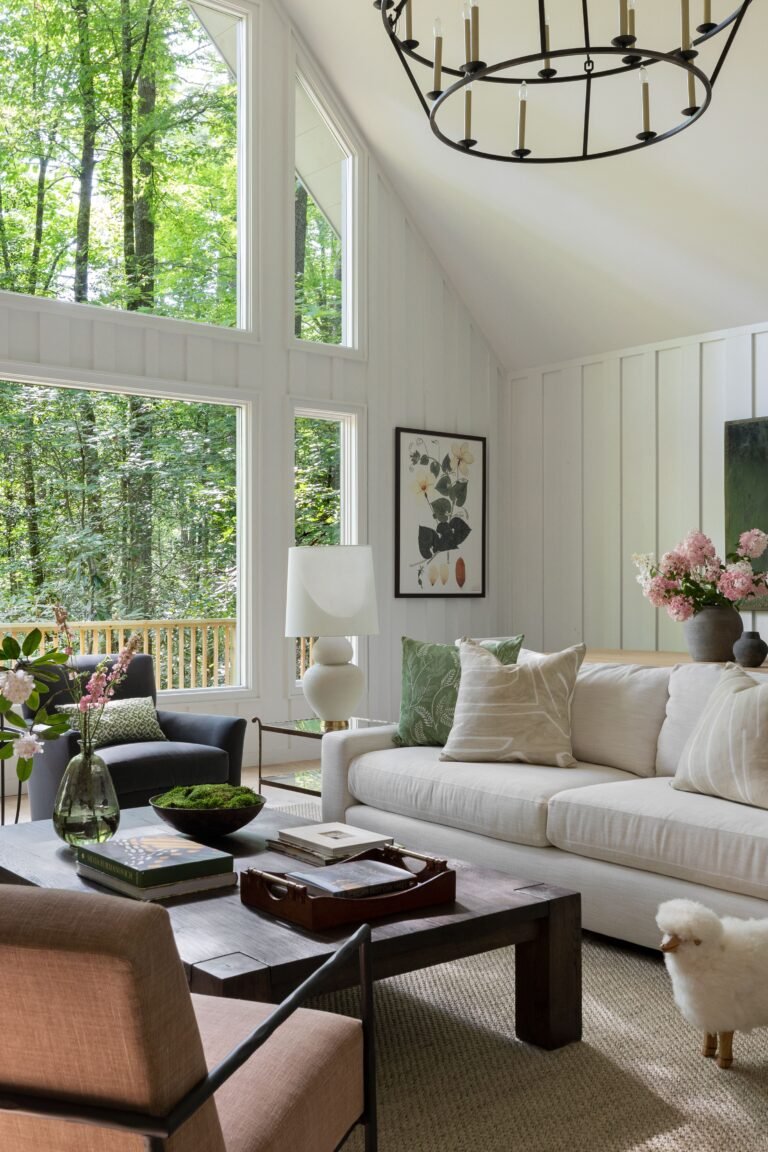
Bare windows can also emphasize architecture. A beautifully shaped window, deep sill, black frame, arched opening, or large picture window deserves attention rather than being hidden.
The key is understanding that “bare” does not necessarily mean “completely untreated.”
A window can look visually bare while still using subtle privacy solutions.
1. Start by Understanding the Privacy Problem
Before choosing a window treatment alternative, determine exactly what kind of privacy is needed.
Not every window requires the same level of protection.
A living-room window facing a private garden may need very little privacy control. A bathroom window facing a neighboring building requires considerably more.
There are several types of privacy to consider.
Visual privacy
This prevents people outside from seeing into the room.
Daytime privacy
Some solutions work particularly well during daylight but become less effective when interior lights are turned on at night.
Nighttime privacy
Nighttime privacy is more difficult because a bright interior can become visible from outside.
Partial privacy
Sometimes you only need to block the lower section of a window while keeping the upper portion open.
Directional privacy
A window may need protection from a particular angle rather than from every direction.
Understanding these differences helps you avoid unnecessary coverings.
2. Use Privacy Window Film
One of the simplest ways to maintain a visually open window is privacy film.
Window film can be applied directly to the glass and is available in many different styles.
Frosted film is particularly popular because it allows light to enter while obscuring detailed views.
This makes it useful for:
- Bathrooms
- Ground-floor windows
- Entry areas
- Bedroom windows
- Urban apartments
- Street-facing rooms
- Kitchen windows
A frosted finish can also create a clean contemporary appearance.
Rather than looking like a traditional window treatment, the glass becomes part of the architecture.
3. Choose Decorative Frosted Glass
Instead of applying film, homeowners can consider permanent frosted or etched glass.
This is especially effective during renovations or new construction.
Textured glass can transform an ordinary window into a design element.
Popular finishes include:
- Frosted glass
- Ribbed glass
- Reeded glass
- Patterned glass
- Obscured glass
- Rain glass
- Textured architectural glass
These surfaces diffuse light beautifully.
They can create privacy without making a room feel dark.
4. Ribbed and Reeded Glass for Modern Interiors
Reeded glass deserves special attention because it combines privacy with visual texture.
The vertical grooves distort the view through the glass while allowing light to pass through.
This makes it particularly useful for contemporary interiors.
Reeded glass works well in:
- Bathroom windows
- Kitchen windows
- Interior partitions
- Bedroom doors
- Entryways
- Home offices
Its vertical pattern can also make a space feel taller.
When paired with slim black, brass, wood, or white frames, reeded glass can become a sophisticated architectural feature.
5. Use Lower-Window Privacy
One of the smartest alternatives to full curtains is covering only part of the window.
For example, a privacy treatment can be installed on the lower half while the upper section remains completely open.
This approach is especially useful for street-facing rooms.
People walking outside generally cannot see important interior details if the lower section is obscured, while sunlight and sky views remain available through the upper glass.
This technique works beautifully with:
- Frosted film
- Café curtains
- Half shutters
- Bottom-up blinds
- Decorative glass
The room receives natural light without sacrificing basic privacy.
6. Bottom-Up Blinds
Traditional blinds usually move from the top downward.
Bottom-up blinds do the opposite.
They can be raised from the bottom, allowing homeowners to block eye-level views while leaving the upper part of the window uncovered.
This is a particularly practical solution for bedrooms and living rooms.
Imagine a large window where the bottom third is covered but the top two-thirds remain open.
You still receive daylight and maintain an outdoor connection, but pedestrians cannot easily see into the room.
The result is both practical and visually clean.
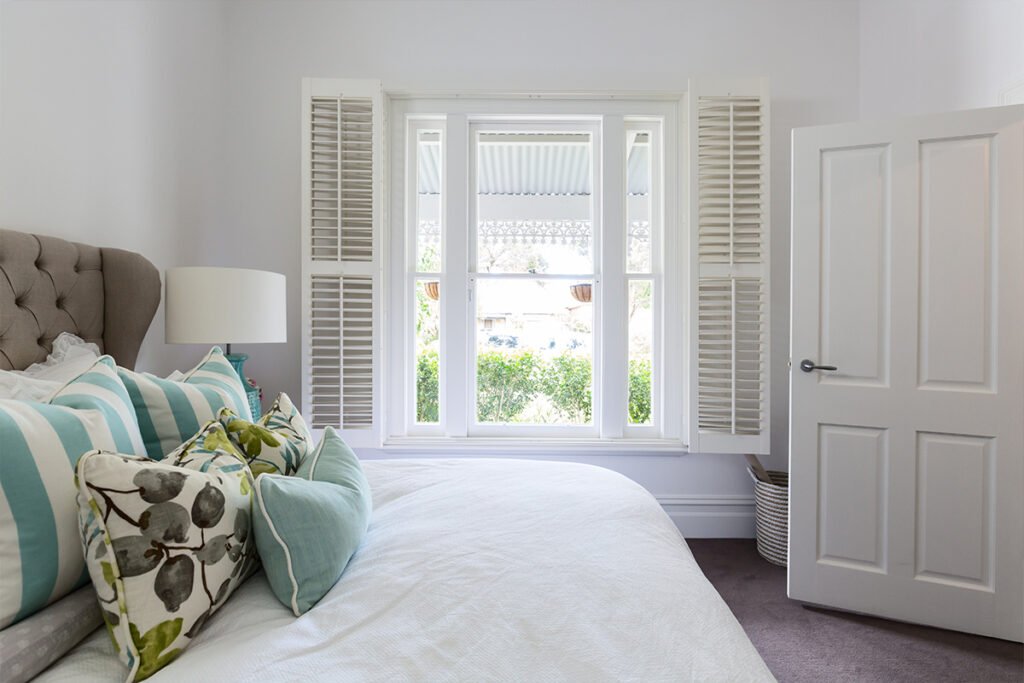
7. Install Interior Shutters
Shutters provide privacy without requiring large amounts of fabric.
Plantation shutters are particularly versatile because their louvers can be adjusted.
You can angle them to:
- Block direct views
- Allow daylight
- Control glare
- Improve privacy
- Add architectural character
Shutters also create strong horizontal or vertical lines, depending on their design.
In minimalist interiors, simple white shutters can blend with the wall.
In traditional interiors, painted or natural wood shutters can become decorative focal points.
8. Café Curtains for a Softer Solution
If you want some fabric without using full-length curtains, café curtains can be an excellent compromise.
They usually cover only the lower portion of a window.
This gives privacy while keeping the upper glass exposed.
Café curtains are especially attractive in:
- Kitchens
- Breakfast areas
- Cottage interiors
- Farmhouse homes
- Small dining rooms
They can also introduce subtle color or pattern without overwhelming the room.
For a modern look, choose simple linen or cotton in a neutral tone.
9. Consider Exterior Landscaping
Privacy does not always have to be created on the window itself.
Outdoor landscaping can provide a natural privacy screen.
Trees, shrubs, ornamental grasses, hedges, and climbing plants can block direct views while preserving natural light.
This approach is particularly effective for ground-floor homes.
For example, a row of tall plants outside a living-room window can provide privacy while allowing sunlight to enter above the foliage.
This creates a softer relationship between the house and garden.
10. Use Tall Plants Strategically
Indoor plants can also provide a small amount of privacy.
A tall fiddle-leaf fig, rubber plant, bamboo-style plant, or other large indoor greenery can partially obscure a window.
This works best when privacy requirements are moderate.
The plants become decorative objects rather than obvious privacy equipment.
They also introduce:
- Texture
- Color
- Organic shapes
- Natural movement
- Visual softness
The important thing is to avoid blocking too much daylight.
11. Make the Window Frame the Feature
Sometimes the best way to make a bare window look intentional is to emphasize its frame.
A simple window can become much more interesting when the frame has a strong finish.
Black frames create a modern industrial appearance.
White frames create a clean and understated appearance.
Natural wood frames provide warmth.
Deeply colored frames can become dramatic architectural details.
If you plan to keep a window visually exposed, its frame deserves as much attention as the surrounding furniture.
12. Paint the Window Trim
Another inexpensive design technique is painting the trim.
A contrasting trim color can make the window appear larger and more architectural.
For example:
- Black trim creates contrast.
- Dark green creates an organic feeling.
- Warm beige creates softness.
- White creates simplicity.
- Deep blue creates a dramatic accent.
The choice should coordinate with the rest of the room.
A bare window surrounded by beautiful trim can look more like framed artwork than an unfinished opening.
13. Use Deep Window Sills
A deep window sill can turn an ordinary window into a functional design feature.
You can decorate the sill with:
- Plants
- Books
- Small sculptures
- Candles
- Ceramics
- Artwork
- Decorative boxes
In bedrooms, a wide sill can even become a reading ledge.
In kitchens, it can hold herbs.
In living rooms, it can display small decorative objects.
The window becomes a built-in shelf rather than simply a source of daylight.
14. Create a Window Seat
If architecture allows it, a window seat can transform a bare window into one of the most attractive features in the room.
A built-in bench beneath the window provides:
- Seating
- Storage
- Reading space
- Decorative interest
A window seat also creates a natural destination for the eye.
Instead of worrying about the lack of curtains, the design focuses attention on the architecture.
For privacy, the surrounding landscaping or lower-window treatment can be combined with the seat.
15. Use Furniture to Improve Privacy
Furniture placement can also help.
A strategically positioned sofa, console, bookshelf, or tall cabinet may interrupt direct sightlines into a room.
This does not mean blocking the window.
Instead, use furniture to control how people move through the space visually.
For example, a sofa positioned perpendicular to a street-facing window can make the interior feel less exposed.
The goal is not to obstruct daylight but to create visual layers.
16. Think About Sightlines
Sightlines are one of the most important concepts when designing rooms without curtains.
Stand outside the house and look toward the window.
What can you see?
Then move around the room and consider what areas are most exposed.
You may discover that only one part of the room needs protection.
Perhaps the sofa is visible but the dining area is not.
Perhaps the lower section of the bedroom is exposed while the upper section is private.
Understanding sightlines allows you to solve the actual problem instead of covering the entire window.
17. Use Window Film With Decorative Patterns
Privacy film does not have to look plain.
Decorative films can mimic:
- Stained glass
- Frosted patterns
- Geometric designs
- Botanical motifs
- Textured glass
This allows the window itself to become artwork.
For minimalist homes, subtle geometric film can add visual interest.
For traditional homes, botanical or etched patterns may work better.
The important thing is to select a pattern that complements the architecture.
18. Consider Smart Glass
Technology offers another solution.
Smart glass can change its transparency depending on the technology used.
Some systems can switch between transparent and opaque states.
This can be useful in bathrooms, bedrooms, offices, and modern homes.
The major advantage is flexibility.
During the day, the window can remain visually open.
When privacy is needed, the glass can become more opaque.
Smart glass can be more expensive than conventional privacy solutions, but it demonstrates how technology can replace traditional curtains.
19. Use External Screens
Exterior screens can provide privacy while keeping interior windows visually clean.
These screens may be made from:
- Timber
- Metal
- Composite materials
- Perforated panels
- Slatted wood
A slatted screen is particularly effective because it blocks direct views from certain angles while allowing light and air movement.
It can also create beautiful shadows throughout the day.
20. Architectural Screens as Art
Privacy screens do not have to be purely functional.
A patterned metal panel or wood lattice can become a major architectural feature.
Imagine sunlight passing through a geometric screen and casting shadows across the interior wall.
The privacy solution becomes part of the design.
This approach works especially well in contemporary homes where architectural details are intentionally emphasized.
21. Use Vertical Slats
Vertical timber slats can provide privacy without completely closing the window.
From certain angles, the slats block direct views.
From others, they allow glimpses of the exterior.
The vertical lines also visually increase height.
This makes them particularly useful in rooms with tall windows.
Natural wood slats add warmth, while painted slats provide a more contemporary appearance.
22. Use External Plant Screens
A green privacy screen can be more attractive than a traditional curtain.
Fast-growing plants, climbing vines, hedges, and tall grasses can be arranged strategically around windows.
However, plant selection should consider:
- Climate
- Sun exposure
- Maintenance
- Growth rate
- Root behavior
- Water requirements
The goal is to create privacy without turning the window into a dark wall of vegetation.
23. Use Sheer Fabric Instead of Thick Curtains
If complete curtain removal feels too extreme, consider sheer fabric.
Sheers provide a soft visual filter while allowing daylight to pass through.
They can be mounted simply and kept open most of the time.
Light-colored linen sheers can create a relaxed appearance.
They also soften hard architectural lines around large windows.
For homes that need nighttime privacy, sheers may need to be combined with another solution because interior lighting can reduce their privacy effectiveness after dark.
24. Layer Privacy Instead of Covering Everything
The best window designs often use layers.
For example:
Layer 1: Privacy glass
Layer 2: Outdoor landscaping
Layer 3: Adjustable blinds
Layer 4: Interior lighting control
You do not necessarily need all four.
The point is that privacy can be achieved through multiple small interventions rather than one large curtain.
This creates a lighter visual appearance.
25. Use Lighting to Protect Privacy
Lighting design plays an important role in rooms with bare windows.
At night, bright interior lighting can make a room visible from outside.
Instead of relying entirely on window coverings, consider using layered lighting.
Use:
- Table lamps
- Wall sconces
- Floor lamps
- Accent lighting
- Indirect lighting
Avoid creating a brightly illuminated interior directly beside a window if nighttime privacy is a concern.
Lighting can therefore become part of the privacy strategy.
26. Choose Warm, Low-Level Lighting
Low-level lighting is particularly useful near exposed windows.
A lamp placed farther into the room can provide comfortable illumination without creating an extremely bright silhouette against the glass.
Warm lighting can also make the room feel cozy.
This is especially effective in living rooms and bedrooms where complete darkness is not necessary.
27. Use Mirrors Carefully
Mirrors can help redirect attention away from exposed windows.
A strategically positioned mirror can reflect:
- Light
- Plants
- Artwork
- Architectural details
However, mirrors should not be used to reflect private areas directly toward the window.
Instead, use them to enhance the room’s visual depth.
28. Treat the Window Like Artwork
One of the most important mindset changes is to stop thinking of every window as something that needs to be dressed.
A beautiful window can function like artwork.
Consider:
- The view
- The frame
- The proportions
- The surrounding wall
- The sill
- The light patterns
If the exterior view is attractive, keeping the window open can make the entire room more interesting.
29. Create a Strong Interior Composition
A bare window looks best when the surrounding room is intentionally designed.
Place furniture, plants, artwork, and lighting around it.
For example, a large window might sit behind a simple sofa.
A plant can stand to one side.
A floor lamp can occupy the other side.
A low table can connect the composition.
The result feels intentional rather than incomplete.
30. Use Symmetry Around Windows
Symmetry can make exposed windows look especially polished.
Place matching lamps or chairs on either side.
Use similar plants or decorative objects.
Symmetry creates order and makes the window feel like the center of the composition.
This technique works particularly well in bedrooms and formal living rooms.
31. Use Asymmetry for a Modern Look
Not every room needs symmetry.
A more contemporary approach is to create an asymmetrical composition.
For example:
- One large plant on one side
- A floor lamp on the other
- A low bench beneath the window
- Artwork positioned nearby
The result feels relaxed and modern.
32. Bare Windows in Small Rooms
Small rooms can benefit significantly from uncovered windows.
Heavy curtains take up visual space.
Bare glass creates a sense of openness.
If privacy is necessary, use:
- Frosted film
- Bottom-up shades
- Shutters
- Exterior landscaping
- Textured glass
Keeping the window visually light can make a small bedroom, kitchen, or office feel larger.
33. Bare Windows in Minimalist Interiors
Minimalism is particularly compatible with uncovered windows.
The philosophy of minimalist design emphasizes:
- Simplicity
- Function
- Natural light
- Clean lines
- Reduced visual clutter
A large window can become one of the room’s main decorative elements without adding another object.
The key is maintaining visual order around it.
34. Bare Windows in Scandinavian Design
Scandinavian interiors often emphasize natural light because daylight can be limited in northern climates.
Simple windows combined with light walls, pale wood, plants, and restrained furniture can create a peaceful atmosphere.
Privacy solutions should remain visually subtle.
Frosted glass, light blinds, and simple roller shades can work without disrupting the aesthetic.
35. Bare Windows in Industrial Interiors
Industrial interiors can benefit from exposed window frames.
Large black-framed windows, steel frames, brick walls, concrete surfaces, and simple furniture can create a strong architectural look.
Curtains may sometimes soften the industrial character too much.
Instead, use adjustable blinds or privacy film where necessary.
36. Bare Windows in Modern Farmhouse Interiors
Farmhouse design does not necessarily require traditional curtains.
Wood trim, simple glass, woven shades, shutters, and café curtains can maintain the warm character while keeping windows visually lighter.
Natural textures are particularly effective.
Use:
- Linen
- Cotton
- Wood
- Woven materials
- Ceramic
- Greenery
These elements can complement a simple window without overwhelming it.
37. Kitchen Windows Without Heavy Curtains
Kitchen windows are excellent candidates for curtain-free design.
Curtains near cooking areas can collect:
- Grease
- Dust
- Steam
- Food particles
Privacy film or café curtains can be easier to maintain.
If the kitchen faces a private garden, you may not need any treatment at all.
Instead, use the window as a focal point above the sink.
38. Bathroom Windows Without Curtains
Bathrooms often require strong privacy.
Textured or frosted glass is one of the most effective solutions.
Reeded glass can create a stylish architectural feature.
High windows can also provide privacy naturally.
If a bathroom window is positioned above eye level, there may be no need for a traditional covering.
39. Bedroom Privacy Without Heavy Drapes
Bedrooms usually require more privacy than living rooms.
However, blackout curtains are not the only solution.
You can combine:
- Frosted lower glass
- Roller shades
- Shutters
- Privacy film
- Exterior screens
For nighttime darkness, blackout roller shades can remain hidden or raised during the day.
This allows the bedroom to feel open without sacrificing sleep conditions.
40. Privacy for Ground-Floor Windows
Ground-floor windows require careful planning.
Instead of covering the entire window, consider a combination of:
- Lower frosted film
- Landscaping
- Exterior screens
- Bottom-up shades
- Privacy glass
The upper section can remain open to preserve daylight.
This creates a strong balance between openness and privacy.
41. Privacy for Urban Apartments
Apartments often face neighboring buildings.
A completely bare window may therefore expose too much of the interior.
In this situation, privacy film and adjustable blinds can provide flexibility.
Another option is placing furniture away from direct sightlines.
Tall plants can also create visual separation.
The goal is to preserve daylight while reducing the sense that the room is on display.
42. Use Exterior Architecture
Balconies, railings, screens, pergolas, and overhangs can all contribute to privacy.
A balcony with vertical screening can protect a living room without covering the window itself.
Pergolas can also filter sunlight and views.
This is a broader architectural approach to privacy.
43. Consider Window Orientation
The direction a window faces affects privacy and sunlight.
North-, south-, east-, and west-facing windows behave differently depending on location.
A window receiving intense afternoon sun may require glare control.
A shaded window may benefit from maximum openness.
Privacy planning should therefore consider both view and sunlight.
44. Control Glare Without Curtains
Privacy is not the only reason people cover windows.
Glare can be another problem.
Instead of thick curtains, consider:
- Solar shades
- Adjustable blinds
- Exterior screens
- Solar-control glass
- Window film
These solutions can reduce glare while keeping the window visually clean.
45. Use Roller Shades That Disappear
Roller shades can be an excellent compromise.
When raised, they occupy very little visual space.
When privacy is needed, they can be lowered.
Choose shades that match the wall color if you want them to disappear visually.
Neutral shades work particularly well in minimalist spaces.
46. Choose the Right Window Treatment Color
If a privacy treatment is necessary, choose a color that blends with the architecture.
A white roller shade on a white wall may nearly disappear.
A black shade can emphasize a dark window frame.
Natural woven shades can add warmth.
The objective is not necessarily to hide the treatment but to make it feel integrated.
47. Use Top-Down Shades
Top-down shades offer another useful configuration.
They can open from the top while remaining closed from the bottom.
This provides privacy at eye level while allowing daylight through the upper portion.
This can be particularly useful in rooms facing sidewalks or neighboring properties.
48. Use Decorative Window Grilles
Window grilles can add character and partially obstruct direct views.
They are especially effective in traditional, colonial, European, or cottage-style architecture.
Modern geometric grilles can also work in contemporary homes.
The pattern should complement the architectural style.
49. Use Stained Glass for Privacy
Stained glass can provide privacy while introducing color and artistic detail.
A small stained-glass section can turn a bathroom, entry, or staircase window into a decorative focal point.
Even subtle colored glass can change the way daylight enters the room.
50. Window Art Without Covering the Glass
Temporary window decals can provide decorative privacy.
They are particularly useful for renters because they can usually be removed without major construction.
Choose high-quality designs that look intentional.
Avoid overly busy patterns if the surrounding room is already visually active.
51. Privacy and Rental Homes
Renters may not be able to replace windows or install permanent screens.
Fortunately, several removable solutions exist.
These include:
- Static-cling film
- Removable privacy film
- Tension-mounted shades
- Freestanding screens
- Temporary blinds
- Tall plants
These options can provide privacy without permanent modifications.
52. Make Privacy Part of the Interior Design
The biggest lesson is that privacy should not be treated as an afterthought.
Instead, consider privacy during the design stage.
Think about:
- Window height
- Furniture placement
- Lighting
- Landscaping
- Glass type
- Exterior screens
- Room orientation
When these elements work together, thick curtains become less necessary.
53. Avoid Making Every Window Identical
Different rooms may need different solutions.
A kitchen window may remain completely bare.
A bathroom may use frosted glass.
A bedroom may use a discreet roller shade.
A living room may use landscaping.
This creates a more customized home.
There is no rule that every window must have the same treatment.
54. Think About Day and Night Separately
One common mistake is choosing a privacy solution based only on daytime conditions.
During daylight, reflective glass or certain films may provide excellent privacy.
At night, the situation can reverse.
When indoor lights are brighter than outdoor light, people outside may see in.
Always test privacy after dark before deciding that a window is fully protected.
55. Use Curtains Only When They Add Something
The goal is not to eliminate curtains at all costs.
Curtains can still be useful.
The question is whether they are necessary.
If curtains provide valuable:
- Insulation
- Blackout
- Acoustic control
- Privacy
- Decorative softness
then they may be worth keeping.
But if they exist only because every window traditionally receives curtains, reconsider the design.
56. Bare Windows and Energy Efficiency
Window coverings can influence indoor temperatures, but glass technology also matters.
Energy-efficient glazing, solar-control glass, and exterior shading can reduce heat gain.
This can allow homeowners to keep windows visually open without relying entirely on heavy interior coverings.
For major renovations, consider the performance of the glass itself.
57. Use Outdoor Shades
Exterior roller shades, awnings, and screens can control sunlight before it enters the house.
This can be more effective than interior curtains in certain climates.
Exterior shading can also reduce glare and solar heat.
It allows the interior window to remain visually clean.
58. Use Pergolas Near Large Windows
A pergola can create shade and privacy around large windows.
Climbing plants can make it even more effective.
The result is a layered indoor-outdoor relationship.
Instead of covering the glass, the architecture outside becomes the privacy solution.
59. Use Fencing Strategically
Privacy fencing can protect ground-floor rooms without covering the windows.
A fence does not necessarily need to be completely solid.
Slatted fencing can create filtered privacy.
This allows air and light to move through while limiting direct views.
60. Combine Natural and Architectural Privacy
The most successful designs often combine several approaches.
For example:
Window: clear glass
Exterior: planted privacy screen
Interior: low furniture
Night: discreet roller shade
No single element has to do all the work.
This creates a flexible and sophisticated solution.
Common Mistakes to Avoid
Mistake 1: Ignoring Nighttime Privacy
A window that feels private during the day may become completely exposed at night.
Always test it under realistic lighting.
Mistake 2: Blocking Too Much Daylight
Trying to create privacy can accidentally make the room dark.
Use partial treatments whenever possible.
Mistake 3: Choosing Decorative Film Without Considering the Room
A strong pattern may compete with other design elements.
Keep the overall visual balance in mind.
Mistake 4: Overusing Plants
Plants can provide privacy, but too many can block valuable light.
Mistake 5: Forgetting Maintenance
Outdoor plants, blinds, shutters, and textured glass all require different levels of cleaning and care.
Mistake 6: Treating Every Window the Same
Each room has different privacy requirements.
Mistake 7: Ignoring the Exterior View
If the view is attractive, hiding it may be unnecessary.
How to Design a Bare Window Step by Step
Step 1: Evaluate the View
Determine whether the exterior is attractive, neutral, or undesirable.
Step 2: Identify Privacy Risks
Look from outside toward the window.
Step 3: Determine When Privacy Is Needed
Daytime? Nighttime? Both?
Step 4: Choose the Least Obstructive Solution
Try landscaping, privacy glass, film, or partial shades before installing heavy curtains.
Step 5: Consider Lighting
Plan nighttime lighting carefully.
Step 6: Design the Surrounding Area
Use furniture, plants, artwork, and architectural details to make the window intentional.
Step 7: Test the Solution
Check the room from different angles during both day and night.
Budget-Friendly Bare Window Ideas
You do not need a major renovation.
Affordable options include:
Privacy film
One of the simplest solutions.
Plants
Use tall indoor or outdoor plants.
Removable shades
Good for renters.
Café curtains
Use inexpensive fabric.
Furniture placement
Rearrange existing pieces to improve sightlines.
Decorative window decals
Useful for small areas.
Paint
Refresh the window trim.
High-End Bare Window Ideas
For luxury interiors, consider:
- Custom architectural glass
- Smart glass
- Motorized shades
- Exterior privacy screens
- Custom shutters
- Integrated landscaping
- Architectural louvers
- Custom window seats
- Large-format energy-efficient glazing
The objective remains the same: preserve openness while providing control.
The Psychology of Bare Windows
Windows influence how people experience a room.
Natural light can make a space feel more open and connected to the outdoors.
An unobstructed view can create visual depth.
Bare windows can also reduce the sense of enclosure.
This is one reason minimalist interiors often emphasize large areas of exposed glass.
The room feels connected rather than closed.
Bare Windows as Focal Points
A dramatic window can become the main feature of a room.
A large picture window overlooking trees, mountains, gardens, or city architecture may be more valuable visually than a wall covered in artwork.
In such cases, adding heavy curtains can distract from the natural view.
Instead, design the room around the window.
Use furniture that faces or frames the view.
Keep colors complementary.
Allow the landscape to become part of the interior palette.
Using the View as Color Inspiration
If a window overlooks greenery, incorporate natural greens and wood tones inside.
If it overlooks water, consider blue-gray accents.
If it overlooks a city, neutral colors and architectural materials may work well.
This creates continuity between interior and exterior.
The window becomes a visual transition.
Bare Windows and Biophilic Design
Biophilic design focuses on connecting people with nature.
Bare windows naturally support this idea.
They provide:
- Daylight
- Outdoor views
- Seasonal changes
- Natural movement
- Visual connection with plants and landscapes
Combining exposed windows with indoor greenery can create a strong nature-inspired environment.
Bare Windows in Home Offices
Home offices benefit from natural light.
A completely uncovered window can make the workspace feel more pleasant.
However, glare on computer screens can become a problem.
Use adjustable blinds or solar shades when needed.
Positioning the desk perpendicular to the window can also reduce direct glare.
Bare Windows in Dining Rooms
Dining rooms often benefit from windows without heavy curtains.
A simple window can provide natural scenery while keeping the dining space visually open.
Plants, pendant lighting, and a carefully chosen table can frame the window beautifully.
Bare Windows in Hallways
Hallway windows are often overlooked.
Because hallways generally require less privacy than bedrooms, they can remain uncovered.
Use these windows to bring daylight deeper into the home.
Bare Windows in Staircases
Staircase windows can become architectural highlights.
Tall narrow windows, clerestory windows, and textured glass can provide light and privacy simultaneously.
Because staircases often have limited furniture, the window naturally becomes a focal point.
Clerestory Windows for Maximum Privacy
Clerestory windows are positioned high on the wall.
They allow daylight to enter while maintaining privacy because people outside generally cannot see normal room activity.
They are excellent for:
- Bathrooms
- Living rooms
- Kitchens
- Hallways
- Bedrooms
If building or renovating a home, clerestory windows can dramatically reduce the need for window coverings.
High Windows as a Design Strategy
Even when large windows are not practical, placing smaller windows higher on the wall can provide similar benefits.
The room receives daylight while maintaining privacy.
This is an architectural solution rather than a decorative one.
Combining Bare Windows With Minimal Blinds
Sometimes the perfect solution is a barely visible blind.
Choose a blind that rolls tightly into a concealed or visually subtle housing.
During the day, keep it fully raised.
At night, lower it.
This preserves the bare-window aesthetic for most of the day.
How to Make Bare Windows Look Expensive
Luxury is often about simplicity.
A window can look sophisticated when:
- The frame is clean.
- The glass is spotless.
- The surrounding wall is uncluttered.
- The furniture is thoughtfully positioned.
- The lighting is layered.
- The view is intentionally framed.
- Privacy solutions are subtle.
You do not need expensive decoration.
Good proportions and thoughtful planning are more important.
Cleaning Matters More Than Ever
When there are no curtains, the glass becomes more visible.
Dirty windows can therefore become a major distraction.
Regular cleaning is important.
Clean the:
- Interior glass
- Exterior glass
- Frames
- Tracks
- Sills
- Hardware
A clean window can make the entire room feel fresher.
Seasonal Considerations
Privacy requirements may change throughout the year.
Trees can provide excellent privacy during summer but less during winter if they lose their leaves.
Outdoor light also changes seasonally.
A solution that works in one season may need additional support in another.
Consider the entire year when designing your privacy strategy.
How to Balance Privacy and Natural Light
The best solution is rarely complete openness or complete coverage.
Instead, aim for balance.
Ask:
How much privacy do I actually need?
How much daylight do I want?
How important is the exterior view?
Do I need privacy all day or only at certain times?
Can landscaping solve part of the problem?
Can architecture solve it better than fabric?
These questions lead to more efficient design decisions.
A Simple Formula for Bare Window Design
A useful design formula is:
Natural Light + Controlled Privacy + Strong Framing + Thoughtful Surroundings = Intentional Bare Window
Natural light keeps the room open.
Privacy controls exposure.
Strong framing makes the window feel architectural.
Thoughtful surroundings make the entire composition feel finished.
Final Thoughts
Bare windows do not have to mean sacrificing privacy.
With the right combination of architectural planning, privacy glass, window films, shutters, blinds, landscaping, lighting, furniture placement, and exterior screening, windows can remain visually open while still providing the level of privacy a home requires.
The most important idea is to stop treating privacy as a problem that must automatically be solved with thick curtains.
Sometimes the best solution is built into the glass.
Sometimes it is outside the window in the form of plants or screens.
Sometimes it comes from the height and position of the window.
And sometimes the best approach is simply a discreet shade that disappears when it is not needed.
When carefully designed, a bare window can become more than an opening in a wall. It can become a source of natural light, a connection to nature, a framing device for beautiful views, an architectural focal point, and an important part of the room’s personality.
The goal is not to make every window completely uncovered.
The goal is to create a window that feels intentionally designed.
Privacy and openness are not necessarily opposites. With thoughtful design, they can work together to create interiors that feel brighter, calmer, more spacious, and more sophisticated—without relying on thick curtains everywhere.
Frequently Asked Questions
Can I have completely bare windows and still maintain privacy?
Yes, depending on the location and window design. High windows, textured glass, landscaping, exterior screens, and carefully positioned furniture can provide privacy without traditional curtains.
Is frosted window film good for privacy?
Frosted film can provide effective visual privacy while still allowing daylight through. However, privacy performance can vary by film type and lighting conditions.
Are bare windows suitable for bedrooms?
They can be, but bedrooms usually require more privacy and nighttime light control. Privacy glass, shutters, roller shades, or other discreet treatments may be appropriate.
What is the best privacy option for a bathroom window?
Frosted glass, reeded glass, textured glass, or privacy film are common choices because they allow daylight while reducing visibility.
Can plants replace curtains for privacy?
Plants can provide partial privacy, particularly for ground-floor windows. Their effectiveness depends on plant height, density, location, and seasonal growth.
Do privacy films work at night?
Not all privacy films provide the same nighttime privacy. When interior lighting is brighter than exterior lighting, some films may no longer prevent people outside from seeing into the room.
How can I make a bare window look decorative?
Emphasize the window frame, add plants, create a window seat, decorate the sill, use attractive furniture placement, and treat the exterior view as part of the room’s design.
Are shutters better than curtains for privacy?
Shutters offer adjustable privacy and light control while creating a more architectural appearance. Curtains provide different benefits, including softness, insulation, and blackout capabilities.
Can I use bare windows in a small room?
Yes. Bare windows can make a small room feel more open because they reduce visual clutter and allow the eye to extend toward the exterior.
What is the best approach to privacy without thick curtains?
There is no single solution for every home. A combination of privacy glass or film, landscaping, adjustable shades, thoughtful lighting, and furniture placement can provide effective privacy while preserving natural light.
Conclusion
The modern approach to window design is not about choosing between privacy and natural light. It is about finding smarter ways to achieve both.
Bare windows can make interiors feel larger, brighter, cleaner, and more connected to the outside world. When privacy is needed, subtle solutions such as textured glass, privacy film, shutters, bottom-up shades, landscaping, exterior screens, and carefully planned lighting can provide protection without covering the entire window.
A well-designed bare window should feel intentional rather than unfinished.
Instead of asking, “What curtains should I put here?” consider asking, “How can this window become part of the architecture?”
That small change in perspective can lead to more creative, functional, and beautiful interiors.