Vertical Gardening Ideas for Small Patios and Balconies
Small patios and balconies can be surprisingly beautiful when they are designed thoughtfully. One of the biggest challenges in a compact outdoor area is finding enough room for plants without making the space feel crowded. Traditional gardening usually requires a reasonable amount of floor space, but vertical gardening offers a smarter solution.
Vertical gardening means growing plants upward instead of allowing everything to spread across the ground. Walls, railings, trellises, shelves, hanging containers, ladders, pocket planters, and specially designed vertical planters can all become useful growing spaces. With the right arrangement, even a tiny balcony or narrow patio can become a green, relaxing outdoor retreat.
Vertical gardens are not only practical. They can also improve the appearance of an outdoor space, create privacy, provide fresh herbs and vegetables, attract pollinators, and make an otherwise plain wall feel lively. Whether you live in an apartment with a small balcony or have a compact patio outside your home, vertical gardening can help you make the most of every available inch.
This guide explores practical vertical gardening ideas for small patios and balconies, including plant selection, container choices, wall systems, DIY projects, privacy solutions, edible gardens, maintenance tips, and design strategies.
What Is Vertical Gardening?
Vertical gardening is a method of growing plants in an upward direction rather than primarily across the ground. Instead of placing dozens of pots on the floor, gardeners use vertical surfaces and structures to support plants.
A vertical garden can be as simple as a few hanging pots attached to a wall or as elaborate as a complete living wall with multiple planting pockets.
Common vertical gardening systems include:
- Wall-mounted planters
- Hanging baskets
- Trellises
- Plant ladders
- Wooden pallets
- Tiered shelves
- Vertical pocket gardens
- Railing planters
- Climbing plant supports
- Stackable planters
- Freestanding vertical towers
- Repurposed containers
The best system depends on the size of your space, the amount of sunlight available, the type of plants you want to grow, and your budget.
Why Vertical Gardening Works So Well in Small Spaces
The main advantage of vertical gardening is simple: it uses height.
A small balcony might have only a few square meters of floor space, but the walls and railings provide additional areas for plants. By moving some greenery upward, you can create a much larger growing area without taking up valuable walking space.
Vertical gardening can also make a compact outdoor area feel more attractive. Plants at different heights create layers, depth, and visual interest.
Other benefits include:
1. Saves Floor Space
Instead of covering the floor with pots, you can attach planters to walls or place them on narrow shelves.
2. Adds Privacy
Tall plants and climbing vines can create a natural screen between your balcony and neighboring buildings.
3. Improves Visual Appeal
A green wall can transform a plain concrete, brick, or painted surface into an attractive garden feature.
4. Makes Gardening Accessible
Raised and vertical containers can be easier to reach than plants growing directly on the ground.
5. Supports Edible Gardening
Herbs, lettuce, strawberries, peppers, and some compact vegetables can grow successfully in vertical arrangements.
6. Creates a Relaxing Atmosphere
Plants can make an outdoor space feel calmer and more connected to nature.
1. Create a Green Wall
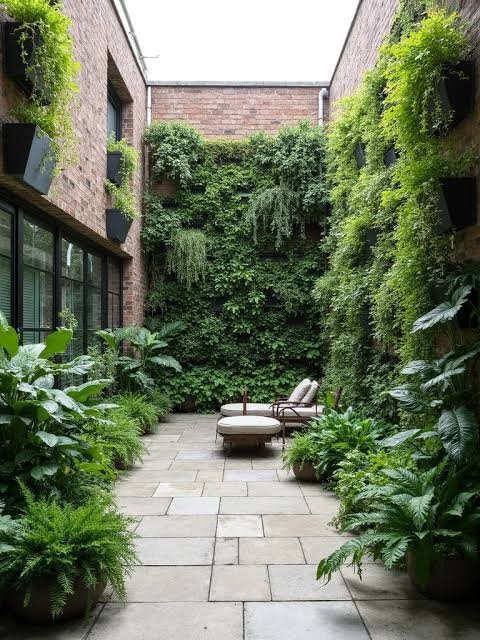
One of the most impressive vertical gardening ideas is a living green wall.
A green wall does not necessarily need to be expensive. You can create a simple version using several wall-mounted planters arranged in a grid.
Choose containers in similar colors for a clean appearance, or use different styles for a more casual garden.
For a small balcony, arrange planters in three or four vertical rows. Place smaller plants toward the top and fuller plants toward the bottom.
Plants suitable for a green wall may include:
- Ferns
- Pothos
- Spider plants
- Herbs
- Small flowering plants
- Succulents
- Trailing plants
- Compact vegetables
Always select plants according to the light conditions of your particular space.
2. Use a Wooden Trellis
A trellis is one of the easiest ways to introduce vertical gardening.
A wooden trellis can be attached to a wall or positioned against a balcony corner. Climbing plants can then grow upward through the openings.
Trellises work particularly well with:
- Jasmine
- Morning glory
- Clematis
- Climbing roses
- Sweet peas
- Cucumbers
- Beans
- Passion flowers
For a small balcony, choose a narrow trellis rather than a large structure that consumes too much space.
A painted wooden trellis can also become a decorative feature even before the plants become established.
3. Install Hanging Planters
Hanging planters are excellent for balconies because they use overhead space.
You can hang containers from:
- Ceiling hooks
- Balcony beams
- Strong railing supports
- Wall brackets
- Freestanding frames
Trailing plants are especially attractive in hanging containers because their leaves and stems naturally grow downward.
Consider plants such as:
- Ivy
- Spider plants
- String of pearls
- Trailing petunias
- Lobelia
- Trailing herbs
- Sweet potato vine
Avoid placing heavy containers overhead unless the structure is designed to safely support them.
4. Build a Vertical Herb Garden
If you enjoy cooking, a vertical herb garden can be one of the most useful additions to a small balcony.
Instead of using several pots across the floor, mount small containers on a wall or arrange them on a narrow vertical shelf.
Popular herbs include:
- Basil
- Mint
- Parsley
- Cilantro
- Thyme
- Oregano
- Rosemary
- Chives
- Sage
Label each container so you can easily identify your herbs.
A vertical herb garden can also be placed close to the kitchen door if the balcony or patio is directly accessible from the kitchen.
5. Use a Ladder as a Plant Stand
An old wooden ladder can be transformed into a stylish vertical garden.
Lean the ladder securely against a wall and place small pots on each step. You can use terracotta pots for a traditional appearance or colorful containers for a more playful design.
Ladder gardens work especially well because the plants are displayed at different heights.
Place taller plants toward the bottom and smaller or trailing plants higher up.
Before using an old ladder, make sure it is stable and strong enough to hold the combined weight of the pots, soil, and water.
6. Try a Vertical Pallet Garden
Wooden pallets can be repurposed into vertical planters.
A pallet garden can be useful for herbs, flowers, and small vegetables. However, not every pallet is appropriate for gardening, so choose materials carefully and avoid pallets with unknown chemical treatments.
You can mount the pallet securely against a suitable wall or structure and attach planting containers.
A pallet garden gives a rustic appearance and can be customized with paint, labels, or decorative details.
7. Create a Balcony Privacy Wall With Plants
Privacy is one of the biggest concerns for many balcony gardeners.
Instead of using a solid screen, plants can provide a softer and more natural barrier.
Climbing plants supported by a trellis can gradually create a green screen.
Another option is to install tall planters containing upright plants.
For a privacy screen, consider plants with dense foliage and growth habits suitable for containers.
The important thing is to avoid overcrowding. A privacy garden should still allow enough airflow and sunlight.
8. Grow Strawberries Vertically
Strawberries are particularly interesting for vertical gardening because their trailing growth makes them suitable for hanging containers and tiered systems.
You can grow strawberries in:
- Hanging baskets
- Stackable pots
- Vertical towers
- Wall-mounted containers
- Tiered planters
Choose a location with suitable sunlight and keep the soil evenly moist without making it waterlogged.
The fruit hanging over the edges can also become an attractive decorative feature.
9. Create a Vertical Vegetable Garden
A small balcony does not necessarily mean you must give up growing vegetables.
Some compact vegetables can work well in containers and vertical systems.
Potential choices include:
- Lettuce
- Spinach
- Radishes
- Peppers
- Bush beans
- Compact tomatoes
- Peas
- Cucumbers
- Small carrots
- Asian greens
Climbing vegetables such as peas, beans, and cucumbers can be trained upward on trellises.
Always select container-friendly varieties and provide adequate support.
10. Use Railing Planters
Balcony railings are often overlooked growing spaces.
Railing planters can sit directly over the railing or attach to it using suitable brackets.
They are particularly useful for:
- Herbs
- Flowers
- Lettuce
- Small vegetables
- Trailing plants
Make sure the planter system is securely attached and does not create a safety hazard.
Also consider how water drains from the containers. You do not want excess water falling onto people or property below.
11. Install Narrow Plant Shelves
If your patio has a blank wall, install several narrow shelves.
Shelves can hold multiple small pots without taking much floor space.
Use a staggered arrangement rather than placing every shelf directly above another. This gives plants more room and creates a layered appearance.
You can also combine different plant types:
Top shelf: trailing plants
Middle shelf: herbs and flowers
Bottom shelf: larger leafy plants
The result is a compact garden with visual depth.
12. Make a Vertical Succulent Garden
Succulents are popular for small-space gardening because many varieties remain compact and can thrive in containers with good drainage.
A vertical succulent display can be created using:
- Wall frames
- Small pockets
- Mounted boxes
- Hanging containers
- Vertical shelves
Succulents generally prefer bright conditions and well-draining soil.
Avoid watering them excessively. Their watering needs are different from moisture-loving plants.
13. Use Pocket Planters
Fabric pocket planters are another practical option.
These systems usually contain multiple pockets arranged vertically. Each pocket can hold a small plant.
Pocket planters are useful for:
- Herbs
- Small flowers
- Leafy greens
- Ferns
- Compact houseplants
They are lightweight compared with many large wooden systems and can be suitable for apartment balconies.
However, make sure the wall or hanging support can safely carry the total weight when the pockets are filled with moist growing medium.
14. Create a Vertical Flower Garden
A vertical flower garden can add color to a small patio without using much floor space.
You can combine flowers with different heights, textures, and blooming seasons.
Possible choices include:
- Petunias
- Marigolds
- Begonias
- Geraniums
- Lobelia
- Nasturtiums
- Impatiens
- Pansies
Choose plants based on your local climate and sunlight conditions.
Trailing flowers can be positioned at the edges so they cascade downward.
15. Use Hanging Baskets at Different Heights
Instead of hanging every basket at the same level, create a layered arrangement.
For example, one basket can hang higher while another is positioned slightly lower.
This creates a sense of movement and allows different plants to occupy different visual levels.
Do not make the arrangement so dense that the balcony becomes difficult to use.
A few carefully positioned baskets can have more impact than dozens of crowded containers.
16. Build a Vertical Garden From Recycled Containers
Vertical gardening can be affordable if you reuse suitable containers.
Potential materials include:
- Old wooden boxes
- Metal containers
- Reclaimed planters
- Small storage baskets
- Reused nursery pots
- Hanging containers
Before reusing anything, ensure that it is clean, safe, and suitable for plants.
Containers need drainage holes. Without drainage, excess water can damage roots.
17. Create a Vertical Garden Around a Seating Area
Your garden does not have to occupy every wall.
Instead, create one green feature behind a chair or small outdoor sofa.
A trellis covered with vines can become a natural backdrop.
Add a small table, comfortable chair, outdoor cushions, and soft lighting to create a cozy outdoor retreat.
This approach works particularly well when the goal is to create a relaxing balcony rather than maximize food production.
18. Combine Plants With Outdoor Lighting
Lighting can make a vertical garden attractive after sunset.
Small outdoor string lights can be placed around a trellis or between shelves.
Solar lights can also be useful where sufficient sunlight is available.
Avoid placing electrical components where they can easily come into contact with water.
The goal should be subtle lighting that highlights the garden rather than overwhelming it.
19. Create a Tropical Balcony Garden
If your climate and light conditions are suitable, you can create a tropical-inspired vertical garden.
Use plants with large leaves, interesting textures, and different shades of green.
Possible options include:
- Ferns
- Elephant ears
- Caladiums
- Palms suitable for containers
- Philodendrons
- Tropical vines
Because tropical plants can have specific moisture and humidity requirements, select species that are appropriate for your environment.
20. Design a Minimalist Vertical Garden
Not every vertical garden needs dozens of plants.
A minimalist design can use three to five carefully selected planters.
Choose containers with similar shapes and colors.
For example, a row of simple black or white planters against a neutral wall can create a modern appearance.
Use plants with different forms to add interest without creating visual clutter.
21. Create a Bohemian Balcony Garden
For a relaxed bohemian look, mix:
- Hanging baskets
- Macramé plant holders
- Terracotta pots
- Wooden shelves
- Trailing plants
- Patterned outdoor textiles
The key is to create a collected appearance rather than a perfectly symmetrical design.
However, even a casual garden needs organization. Keep pathways clear and avoid placing too many containers in one area.
22. Use a Freestanding Vertical Garden Tower
If you cannot attach anything to your walls, consider a freestanding vertical planter.
Vertical towers are available in different shapes and sizes.
They can hold multiple plants while occupying a relatively small footprint.
This is especially useful for renters who cannot drill holes into walls.
Choose a stable model with a broad enough base for the conditions of your balcony.
23. Grow Climbing Beans
Beans are excellent candidates for vertical gardening.
A simple trellis, bamboo structure, or garden netting can give climbing beans the support they need.
The plants grow upward, making productive use of limited space.
Beans also produce attractive foliage, so they can serve both decorative and practical purposes.
Make sure the structure is strong enough to support mature plants.
24. Grow Cucumbers on a Trellis
Cucumbers can spread across a large area if allowed to grow on the ground.
Training them vertically can save considerable space.
Install a strong trellis and guide the vines upward as they develop.
Container-grown cucumbers need adequate moisture, nutrition, and sunlight.
Choose compact or container-friendly varieties whenever possible.
25. Use Bamboo for a Natural Vertical Structure
Bamboo poles can be used to create inexpensive garden supports.
They can be arranged into:
- A-frame trellises
- Grid structures
- Teepees
- Simple vertical frames
Bamboo works particularly well with climbing vegetables and flowering vines.
Secure the structure carefully so that it does not fall or become unstable in strong wind.
26. Make a Vertical Garden From Terracotta Pots
Terracotta pots can create a warm Mediterranean-inspired look.
You can arrange them on wall-mounted shelves or place several pots on a vertical metal frame.
Terracotta is attractive but porous, meaning it can dry out faster than some other container materials.
Monitor soil moisture, especially during hot weather.
27. Create a Tea and Herb Balcony
If you enjoy herbal drinks, dedicate your vertical garden to useful herbs.
Depending on your climate, you might grow:
- Mint
- Lemon balm
- Chamomile
- Thyme
- Rosemary
- Basil
- Sage
Keep aggressive spreading herbs such as mint in their own containers.
A dedicated herb garden can be both attractive and practical.
28. Add Pollinator-Friendly Plants
A balcony garden can also provide resources for bees, butterflies, and other pollinators.
Flowers can be selected based on local climate and pollinator preferences.
Consider flowering plants that provide nectar and pollen during different parts of the growing season.
Avoid using pesticides unnecessarily, particularly when your garden is intended to support beneficial insects.
29. Make Use of Corner Spaces
Corners are often wasted areas in small patios and balconies.
A triangular shelf or narrow vertical tower can turn a corner into a productive garden.
Corners are also ideal for trellises.
Place climbing plants in the corner and allow them to grow upward rather than outward.
30. Create a Vertical Garden With a Color Theme
A color theme can make a small garden look more intentional.
You could choose:
- Green and white
- Green and purple
- Terracotta and green
- Black containers with green foliage
- Pastel flowers
- Bright tropical colors
Keep the containers consistent while allowing plant colors to vary.
A limited palette often creates a more organized appearance.
31. Choose Plants According to Sunlight
Before buying plants, study your balcony or patio.
Observe how much direct sunlight reaches the space.
A sunny balcony may receive several hours of direct light, while another balcony might receive mostly shade.
Do not choose plants simply because they look attractive at the nursery.
Instead, match each plant to its growing conditions.
Consider:
- Direct sunlight
- Partial shade
- Full shade
- Morning sun
- Afternoon sun
- Reflected heat
- Wind exposure
Understanding your microclimate can make vertical gardening much easier.
32. Consider Wind Exposure
Balconies can experience stronger winds than gardens at ground level.
Wind can dry containers quickly and may damage tall plants.
Use heavy or securely anchored containers at lower levels.
For exposed balconies, select plants with flexible stems and compact growth habits.
Tall trellises should also be firmly secured.
Never create a structure that could become dangerous during strong winds.
33. Use Lightweight Containers
Weight is an important consideration in balcony gardening.
A container becomes significantly heavier after it is filled with soil and water.
Instead of using large heavy pots everywhere, consider lightweight containers where appropriate.
You can also reduce unnecessary weight by selecting suitable lightweight growing media.
However, never compromise structural safety. Follow your building’s rules and any applicable load restrictions.
34. Think About Watering
Vertical gardens can sometimes be harder to water than traditional ground-level gardens.
Plants at the top may dry out quickly, while lower containers can receive runoff from above.
Check each container individually.
For larger installations, a drip irrigation system may make watering easier.
For a small balcony, a watering can may be sufficient.
The most important thing is consistency.
35. Make Drainage a Priority
Good drainage is essential for container gardening.
Each planter should have appropriate drainage.
Without drainage, water can collect around roots and cause problems.
Place trays beneath containers where needed, but do not allow standing water to remain for long periods.
For balcony gardens, consider where drainage water will go.
You do not want water damaging walls, floors, furniture, or neighboring property.
36. Use Quality Potting Mix
Container plants usually perform better in a suitable potting mix rather than ordinary garden soil.
A quality growing medium should provide:
- Drainage
- Air around roots
- Moisture retention
- Structural support
Different plants may require different growing conditions.
Succulents, herbs, vegetables, and tropical plants do not necessarily need identical soil mixes.
37. Fertilize Container Plants Carefully
Plants grown in containers have limited access to nutrients.
Over time, nutrients can be depleted from the growing medium.
Use an appropriate fertilizer according to the requirements of your plants and the product instructions.
Avoid assuming that more fertilizer means faster growth.
Excess fertilizer can damage plants and contribute to nutrient problems.
38. Prune and Train Plants Regularly
Vertical gardens look better when plants are maintained.
Trim dead leaves and remove damaged growth.
Climbing plants may need regular training so that they stay attached to their support.
Trailing plants may need occasional pruning to prevent them from becoming excessively long.
Regular maintenance also allows you to identify pests and diseases early.
39. Rotate Containers When Necessary
Plants may grow unevenly if they receive light from only one direction.
Where practical, rotate movable containers periodically.
This can encourage more balanced growth.
However, do not frequently move plants that are sensitive to environmental changes.
40. Keep the Garden Organized
A small garden can quickly become messy if every available surface becomes a plant stand.
Create clear zones.
For example:
- One wall for herbs
- One corner for climbing plants
- One railing for flowers
- One shelf for decorative plants
This makes the space easier to maintain.
41. Avoid Overcrowding
One of the biggest mistakes in small-space gardening is trying to fit too many plants.
A vertical garden needs room for plants to grow.
Overcrowding can reduce airflow and increase maintenance.
Start with fewer plants and add more gradually as you learn how your space behaves.
42. Use Plant Stands to Create Levels
Different heights create visual depth.
Combine:
- Floor-level containers
- Medium-height shelves
- Wall planters
- Hanging baskets
- Tall trellises
This layered approach can make even a small garden feel larger.
43. Create a Seasonal Vertical Garden
Your garden does not need to look identical throughout the year.
Replace seasonal flowers when necessary.
Cool-season greens can be followed by warm-season herbs and flowers.
This keeps the balcony visually interesting.
Choose plants according to your local growing season.
44. Use Vertical Gardening for Apartment Kitchens
If your balcony is connected to a kitchen, turn it into an edible garden.
Grow herbs close to the kitchen for convenient harvesting.
A narrow vertical herb rack can hold several varieties without taking up much floor space.
Freshly harvested herbs can add flavor to everyday meals.
45. Add Labels for a Practical Garden
Labels are especially useful for herb and vegetable gardens.
You can use:
- Wooden labels
- Chalkboard tags
- Metal labels
- Recycled markers
Labels also add a decorative touch.
For families, labeling can make gardening more educational for children.
46. Create a Children’s Vertical Garden
A small vertical garden can be an excellent way to introduce children to gardening.
Choose easy-growing plants and give children simple responsibilities such as:
- Watering
- Harvesting herbs
- Checking leaves
- Planting seeds
- Cleaning containers
Avoid placing fragile or hazardous items where children can easily access them.
47. Make a Modern Metal Vertical Garden
Metal frames can create a sleek contemporary appearance.
A black or neutral metal structure can hold several simple planters.
This style works particularly well with modern apartment balconies.
Combine the structure with plants that have different textures.
For example, combine upright foliage with trailing plants.
48. Try a Rustic Wooden Garden Wall
Wood adds warmth to a patio.
A wooden panel can serve as the foundation for several planters.
Use weather-appropriate materials and finishes.
Make sure the wood is protected from excessive moisture and that the entire structure is securely installed.
49. Create a Living Privacy Screen
Instead of installing a permanent wall, use plants to create a living screen.
A trellis with climbing vines can gradually fill the space.
Another option is a row of tall container plants.
This can soften the appearance of a balcony while creating a stronger sense of privacy.
50. Combine Vertical Gardening With Comfortable Furniture
A garden is more enjoyable when it is designed for living, not just looking at.
Add a small chair or bench.
Use outdoor cushions and a compact table.
Place the tallest vertical garden elements behind the seating area.
Keep enough space for comfortable movement.
The result can become a peaceful outdoor extension of your home.
Common Mistakes to Avoid
Vertical gardening is relatively simple, but a few mistakes can cause unnecessary problems.
Mistake 1: Ignoring Weight
Containers, soil, plants, and water can become surprisingly heavy.
Always consider structural safety.
Mistake 2: Choosing Plants Without Checking Light
A beautiful plant will struggle if its light requirements do not match your balcony.
Mistake 3: Forgetting Drainage
Poor drainage can create serious root problems.
Mistake 4: Overwatering
Container plants often need careful watering rather than constant watering.
Mistake 5: Overcrowding
Too many plants can reduce airflow and make maintenance difficult.
Mistake 6: Poor Support
Climbing plants can become heavy.
Make sure trellises and supports are secure.
Mistake 7: Ignoring Wind
Balconies can be exposed to strong winds.
Secure hanging baskets and tall structures.
Mistake 8: Using Unsafe Recycled Materials
Avoid containers with unknown coatings or chemicals.
Mistake 9: Forgetting Maintenance
A vertical garden still requires watering, pruning, feeding, and pest monitoring.
How to Plan Your Own Vertical Garden
Before buying anything, take a few minutes to plan.
Step 1: Measure the Space
Measure the width and height of your balcony or patio.
Step 2: Observe Sunlight
Record where sunlight appears during the day.
Step 3: Identify Available Surfaces
Look at walls, railings, corners, ceilings, and floor areas.
Step 4: Choose Your Purpose
Decide whether you want:
- Decorative plants
- Herbs
- Vegetables
- Flowers
- Privacy
- A relaxing garden
- A combination of these
Step 5: Select the Vertical System
Choose shelves, trellises, hanging baskets, wall planters, or towers.
Step 6: Choose Suitable Plants
Match plants to your light, climate, available space, and maintenance ability.
Step 7: Plan Watering
Decide how each plant will be watered.
Step 8: Install Securely
Make sure all structures are stable.
Step 9: Start Small
Do not fill every space immediately.
Step 10: Adjust Over Time
Observe how plants respond and change your arrangement as necessary.
Budget-Friendly Vertical Gardening Ideas
You do not need a large budget to create a beautiful vertical garden.
Some affordable ideas include:
- Repurposed shelves
- Simple wooden frames
- Hanging containers
- Reused small pots
- DIY trellises
- Railing planters
- Fabric pocket systems
- Reclaimed wooden boxes
Spend money on things that directly improve plant health, such as good growing medium and suitable containers.
Decorative accessories can be added later.
Best Plants for Small Vertical Gardens
The ideal plants depend on climate and light, but many compact species can work well.
Herbs
Basil, thyme, oregano, chives, parsley, and rosemary can be useful choices.
Flowers
Petunias, marigolds, pansies, begonias, and lobelia can provide color.
Leafy Plants
Lettuce, spinach, and other compact greens can be suitable for edible gardens.
Climbers
Beans, peas, cucumbers, jasmine, and certain flowering vines can use trellises.
Trailing Plants
Ivy, trailing flowers, and suitable decorative plants can soften shelves and hanging baskets.
Succulents
Many compact succulents can work well in sunny vertical displays with excellent drainage.
Small Balcony Vertical Garden Layout Ideas
A narrow balcony can use a wall-mounted arrangement.
Place a vertical garden on the longest wall and keep the center open.
A second option is to place tall plants at one end and use railing planters along the side.
For an extremely small balcony, focus on one strong vertical feature rather than multiple structures.
Small Patio Vertical Garden Layout Ideas
A patio gives you slightly more freedom.
You can combine:
- A trellis
- A plant shelf
- Hanging baskets
- A small seating area
- Floor containers
Place the tallest elements at the back and smaller plants toward the front.
This creates depth without blocking the entire patio.
Vertical Garden Ideas for Renters
Renters may have restrictions against drilling into walls.
In this situation, consider:
- Freestanding towers
- Ladder shelves
- Plant stands
- Railing planters
- Hanging systems approved by the building
- Portable trellises
Choose solutions that can be removed without damaging the property.
Always check your lease or building rules before installation.
How to Make a Vertical Garden Look Expensive
A polished garden is usually more about organization than cost.
Use matching containers.
Keep the color palette simple.
Group plants according to their visual appearance.
Hide messy supports where possible.
Prune plants regularly.
Use quality outdoor furniture and subtle lighting.
Most importantly, avoid clutter.
A simple vertical garden with healthy plants can look more sophisticated than a large collection of random containers.
Eco-Friendly Vertical Gardening
Vertical gardening can support sustainable habits.
Consider growing herbs and vegetables at home.
Reuse suitable containers.
Collect rainwater where legal and practical.
Choose durable materials.
Avoid unnecessary plastic purchases.
Select plants that are well adapted to your climate.
Composting suitable organic material can also help reduce household waste and provide nutrients for plants.
Final Thoughts
Vertical gardening is one of the most practical ways to transform a small patio or balcony into a beautiful outdoor space. Instead of allowing limited floor space to restrict your creativity, look upward.
Walls, railings, shelves, trellises, hanging baskets, ladders, towers, and other structures can provide valuable growing space. With careful planning, even a very small balcony can accommodate flowers, herbs, vegetables, climbing plants, and decorative greenery.
The most successful vertical gardens are not necessarily the biggest. They are the ones that match the available space, sunlight, climate, watering routine, and lifestyle of the gardener.
Start with a simple idea. Install a small trellis, add a few wall planters, or create a vertical herb garden. Once you understand how your plants respond to the environment, you can expand the system.
Whether your goal is to grow fresh herbs, create balcony privacy, attract pollinators, add color, or simply make a small outdoor area more relaxing, vertical gardening provides countless possibilities.
A compact patio or balcony does not have to feel empty or boring. With thoughtful plant selection and creative use of vertical space, it can become a green retreat that feels larger, more comfortable, and more connected to nature.
The key is to think beyond the floor.
Grow upward, use your space wisely, and let your small balcony or patio become a garden of its own.