Warm Lighting Hacks: Turning a Cold Bedroom into a Cozy Haven
A bedroom should feel like a place where you can slow down, relax, and recharge. Yet even a beautifully decorated bedroom can sometimes feel cold, flat, or uninviting. One of the most overlooked reasons is lighting.
The right lighting can completely transform the atmosphere of a bedroom. It can make a small room feel intimate, make a large room feel comfortable, highlight beautiful furniture, soften harsh architectural features, and create an environment that encourages relaxation. On the other hand, bright white bulbs, a single ceiling fixture, or poorly positioned lights can make even an expensive bedroom feel more like an office or waiting room.
Fortunately, creating a warm and cozy bedroom does not require a complete renovation. With a few thoughtful lighting changes, you can dramatically improve the mood of your space.
This guide explores practical warm lighting hacks for bedrooms, from choosing the right color temperature and layering different light sources to using bedside lamps, wall lights, candles, smart bulbs, hidden LED strips, and decorative fixtures. Whether you have a tiny bedroom, a large master suite, a rental apartment, or a minimalist space, these ideas can help you create a cozy haven.
Why Bedroom Lighting Matters
Lighting affects much more than how well you can see. It influences the atmosphere and visual character of an entire room.
A bedroom with cool, intense lighting may feel energetic and functional, but it may not feel relaxing. Warm light, especially when combined with multiple low-level sources, tends to create a softer and more intimate environment.
Think about the difference between a brightly illuminated store and a softly lit hotel bedroom. Both may have attractive interiors, but the lighting communicates completely different moods.
Your bedroom should generally support several activities:
- Getting dressed
- Reading
- Relaxing
- Using your phone or laptop
- Preparing for sleep
- Finding items at night
- Cleaning and organizing
- Enjoying quiet personal time
Because these activities require different levels of illumination, relying on one light source is rarely ideal.
A successful lighting design combines several types of light so that you can adjust the room according to the moment.
What Makes a Bedroom Feel Cold?
Before changing your lighting, it helps to understand what makes a bedroom appear cold.
Several factors can contribute to a chilly visual atmosphere.
Cool White Bulbs
Bulbs with a high color temperature produce a blue-white appearance. They can be useful for workspaces and certain task areas, but excessive cool lighting can make a bedroom feel clinical.
One Harsh Ceiling Light
A central ceiling fixture often creates strong illumination from above while leaving corners relatively dark. The result can be flat in some areas and harsh in others.
Insufficient Side Lighting
If the only light comes from the ceiling, the walls and furniture may lack visual depth. Bedside lamps and accent lights can help distribute illumination throughout the room.
Excessive Brightness
A room can feel uncomfortable simply because it is too bright. Bedrooms generally benefit from the ability to reduce brightness in the evening.
Bare Bulbs
Exposed bulbs can sometimes look attractive in industrial interiors, but they may produce uncomfortable glare if positioned incorrectly.
Lack of Decorative Lighting
Functional lighting is necessary, but decorative lighting adds personality. A bedroom without accent lighting can feel unfinished.
Start With Warm Color Temperature
One of the easiest ways to make a bedroom feel warmer is to choose bulbs with a warm color temperature.
Color temperature is measured in Kelvin, usually written as K.
Lower Kelvin values generally appear warmer and more yellow, while higher Kelvin values appear cooler and more blue-white.
For many bedrooms, warm white lighting in the general range of approximately 2700K to 3000K can create a comfortable atmosphere.
Very warm lighting around 2200K to 2700K can produce an especially cozy, intimate appearance, while lighting around 3000K can remain warm while providing somewhat clearer visibility.
The ideal choice depends on your bedroom design and personal preference.
Warm Light for Relaxation
Warm light can make materials such as wood, linen, wool, cotton, and natural stone appear richer and softer.
If your bedroom contains warm neutrals, beige bedding, cream walls, wood furniture, or earthy colors, warm lighting can enhance those tones beautifully.
Keep Bulb Temperatures Consistent
One common mistake is mixing dramatically different color temperatures in the same room.
For example, a warm bedside lamp next to a very cool ceiling light can create visual inconsistency.
Try to keep the major light sources within a similar warm range unless you have a specific design reason to create contrast.
Use Layered Lighting
One of the most important bedroom lighting principles is layering.
Instead of depending on one light source, combine several lighting layers.
The three traditional categories are:
- Ambient lighting
- Task lighting
- Accent lighting
A fourth category, decorative lighting, can also be considered separately.
Ambient Lighting
Ambient lighting provides general illumination.
Examples include:
- Ceiling fixtures
- Flush mounts
- Chandeliers
- Recessed lights
- Large pendant lights
- Wall-mounted fixtures
Ambient lighting should illuminate the room without becoming unnecessarily harsh.
Task Lighting
Task lighting is designed for specific activities.
Examples include:
- Reading lamps
- Bedside lamps
- Dressing-area lights
- Desk lamps
- Vanity lights
Task lighting should be positioned so that it is useful without producing glare.
Accent Lighting
Accent lighting highlights particular features.
You might use it to illuminate:
- Artwork
- Architectural details
- Shelves
- Plants
- Curtains
- Headboards
- Decorative objects
Accent lighting adds depth and visual interest.
Decorative Lighting
Decorative lights are chosen partly because they look beautiful.
Examples include:
- String lights
- Sculptural lamps
- Decorative pendants
- Lantern-style fixtures
- Small table lamps
They can become design features even when they are not the main source of illumination.
Replace the Single Ceiling Light
If your bedroom has one central ceiling fixture, you do not necessarily need to remove it. Instead, supplement it.
Keep the ceiling light for situations when you need general brightness, but create softer lighting options around the room.
For example, you could combine:
- A warm ceiling fixture
- Two bedside lamps
- A floor lamp
- Hidden LED lighting
- Small accent lights
Then you can use only the sources you need.
At night, you may turn off the ceiling light and rely on bedside and accent lighting.
During cleaning, you can use the brighter ceiling fixture.
This simple change makes the bedroom much more flexible.
Choose the Right Bedside Lamps
Bedside lighting has a major effect on bedroom comfort.
A good bedside lamp should provide useful illumination while contributing to the room’s overall aesthetic.
Consider the size of your bedside table.
A huge lamp on a tiny nightstand can make the space feel crowded. Conversely, a tiny lamp may disappear visually on a large table.
The lamp should also be positioned so that the light does not shine directly into your eyes.
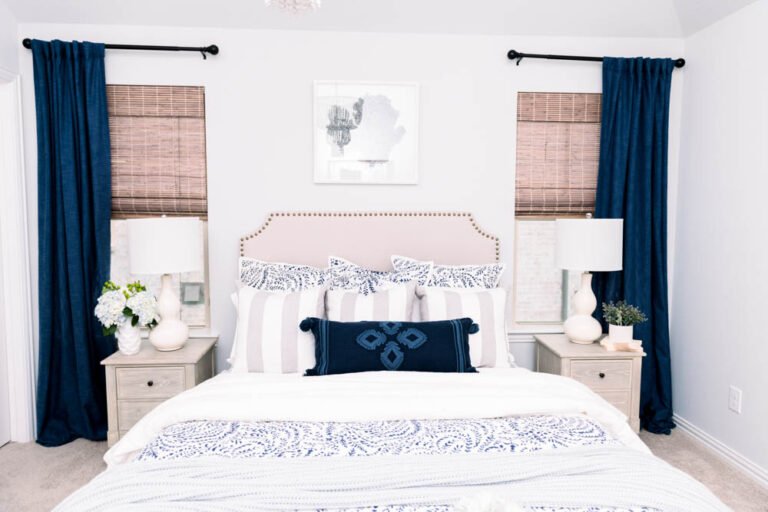
Matching Lamps
Matching lamps on both sides of the bed create symmetry.
This works particularly well in traditional, transitional, contemporary, and hotel-inspired bedrooms.
Mismatched Lamps
You can also use different lamps while maintaining balance.
For example, one side could feature a table lamp while the other has a wall-mounted reading light.
The important thing is to maintain visual harmony.
Install Wall Sconces
Wall sconces are one of the most effective solutions for creating cozy bedroom lighting.
They free up bedside-table space while providing focused illumination.
Sconces can be installed:
- Beside the bed
- Above nightstands
- Near a reading chair
- Along a hallway leading to the bedroom
- Around a dressing area
Choose shades that diffuse light rather than producing excessive glare.
Adjustable sconces are particularly useful for reading because you can direct the light exactly where you need it.
Add a Floor Lamp
A floor lamp can instantly make a bedroom feel more layered.
Place one in an empty corner, beside a reading chair, near a dresser, or next to a tall plant.
A floor lamp is especially helpful when the room has large vertical surfaces that feel visually empty.
For a cozy appearance, consider lamps with fabric shades, paper shades, frosted glass, or other materials that soften the light.
Use Lampshades to Soften Light
The bulb itself is only part of the lighting equation. The lampshade can dramatically affect how light spreads.
A translucent shade allows light to pass through gently.
Fabric shades can produce a soft, diffused glow.
Opaque shades direct light more strongly upward or downward.
If your bedroom currently feels harsh, replacing transparent or exposed fixtures with diffusing shades may make a noticeable difference.
Use Fabric Shades for a Cozy Effect
Fabric lampshades work particularly well in bedrooms because they visually communicate softness.
Linen shades can create a relaxed, natural appearance.
Cotton shades provide a casual look.
Pleated shades can introduce traditional character.
Textured shades can add visual interest even when the light is turned off.
The goal is not simply to make the room brighter. It is to create a pleasant quality of light.
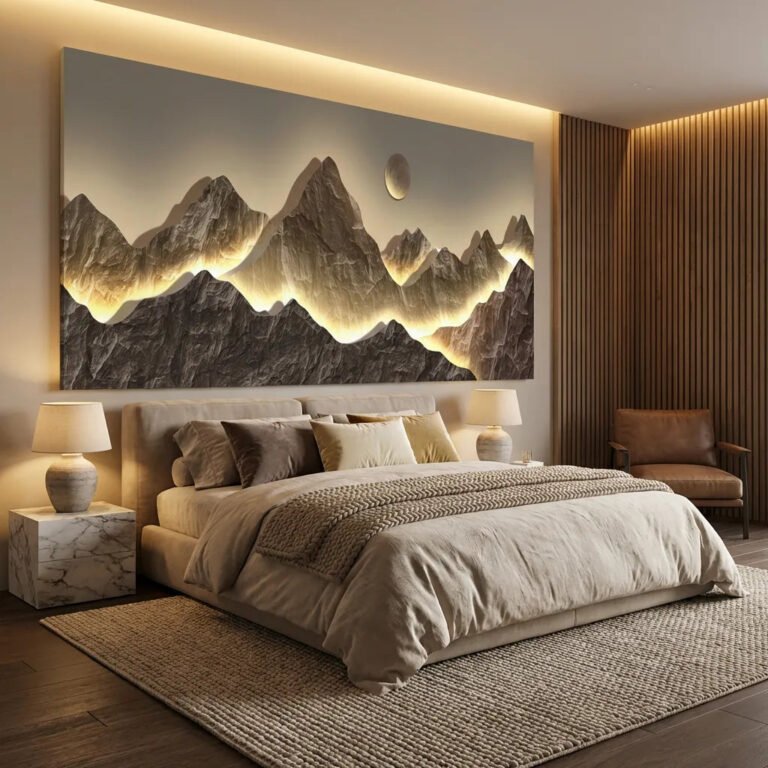
Add Hidden LED Strip Lighting
LED strip lighting can be used in subtle ways to create a warm glow.
Instead of installing visible strips everywhere, hide them behind architectural or furniture elements.
Possible locations include:
- Behind the headboard
- Under the bed
- Behind a dresser
- Inside open shelving
- Beneath floating cabinets
- Along curtain pelmets
- Behind a mirror
Hidden lighting is particularly effective because you see the glow rather than the light source itself.
Under-Bed Lighting
Under-bed lighting is a popular cozy-bedroom technique.
A low-intensity warm LED strip can create the impression that the bed is floating.
It also provides gentle illumination when you need to get up during the night.
Use a dimmer setting if possible so the light remains subtle.
Illuminate the Headboard
The headboard is one of the most visually important elements in a bedroom.
Adding lighting behind or around it can transform the entire sleeping area.
For example, a warm LED strip placed behind a large upholstered headboard can create a soft halo effect.
This type of indirect illumination avoids the harshness associated with exposed bulbs.
It can also make a simple headboard look more sophisticated.
Try Backlighting Behind the Bed
Backlighting works because it creates indirect illumination.
Rather than shining directly into the room, the light bounces off the wall.
This produces softer shadows and a more atmospheric appearance.
A warm backlight behind the bed can become the visual centerpiece of the room.
If you have artwork or a decorative wall behind the bed, consider carefully positioned accent lighting instead.
Use a Dimmable Lighting System
Brightness is just as important as color temperature.
A warm bulb at full intensity may still feel too bright at night.
Dimmers allow you to adjust the room according to your activity.
For example:
Morning: brighter light for getting dressed.
Afternoon: moderate light if needed.
Evening: softer light for relaxing.
Before bed: very low light.
Dimming also makes decorative lighting more versatile.
If your existing fixtures support dimming, this can be one of the most valuable upgrades you make.
Smart Bulbs for Flexible Atmosphere
Smart bulbs provide another convenient way to control bedroom lighting.
Depending on the bulb and system, you may be able to adjust:
- Brightness
- Color temperature
- Scheduling
- On/off timing
- Scenes
- Remote control
A smart bulb can be programmed to gradually become brighter in the morning and softer in the evening.
Some systems also allow you to create preset scenes.
For example:
Relax Scene: warm and dim.
Reading Scene: warm and moderately bright.
Cleaning Scene: brighter general illumination.
Night Scene: very dim warm light.
Create a Bedtime Lighting Routine
Lighting can become part of your evening routine.
Instead of turning off every light at once, gradually reduce the brightness and number of light sources.
For example:
- Turn off the main ceiling light.
- Keep a floor lamp on.
- Reduce bedside lamp brightness.
- Turn on a subtle accent light.
- Finally, switch off the remaining lights.
This creates a gradual transition from an active evening environment to a quieter nighttime atmosphere.
Use Warm Lamps Around the Room
You do not need expensive designer fixtures to achieve a cozy look.
Several small lamps can sometimes create a better atmosphere than one expensive statement fixture.
Try placing small lamps on:
- A dresser
- Bookshelves
- A console
- A window ledge
- A nightstand
- A desk
Multiple small pools of light make a room feel more intimate.
Create Pools of Light
A cozy room does not have to be evenly illuminated from wall to wall.
Instead, allow certain areas to glow while others remain slightly darker.
For example:
- A bedside lamp creates a reading zone.
- A floor lamp creates a chair zone.
- A dresser lamp creates a decorative zone.
- A hidden LED creates a soft background glow.
This creates visual depth.
Highlight Architectural Features
If your bedroom has attractive architectural details, lighting can make them more noticeable.
Consider highlighting:
- Exposed beams
- Wall niches
- Decorative molding
- Textured walls
- Built-in shelving
- Arched doorways
- Alcoves
Indirect lighting can emphasize these features without overpowering them.
Light Your Artwork
Artwork often disappears in poorly lit bedrooms.
A small picture light or carefully positioned accent fixture can draw attention to a favorite piece.
Keep the brightness appropriate for the space.
The goal is to create a visual focal point, not a spotlight that dominates the entire room.
Add Lighting Behind Mirrors
Backlit mirrors can create a luxurious atmosphere.
Instead of placing a bright bulb directly in front of the mirror, install illumination behind it.
This produces a floating effect and creates soft wall lighting.
In a dressing area, combine backlighting with functional front lighting so the mirror remains practical.
Use String Lights Carefully
String lights can make a bedroom feel playful and cozy.
They are especially popular in:
- Teen bedrooms
- Bohemian interiors
- Cottage-style rooms
- Casual bedrooms
- Small apartments
However, avoid using too many lights.
A few strands placed around a headboard, shelf, or window can be enough.
Choose warm-toned lights rather than very bright white ones if your goal is coziness.
Incorporate Candlelight
Candles create an atmosphere that electric lighting cannot completely replicate.
The flickering quality of candlelight adds movement and warmth.
Use candles around:
- Bathtubs
- Dressers
- Nightstands
- Decorative trays
Always follow fire-safety practices and never leave an open flame unattended.
If you prefer a safer option, battery-operated flameless candles can provide a similar visual effect.
Try Lanterns
Lanterns can add warmth and character to a bedroom.
A small lantern on a dresser or a larger decorative lantern in a corner can become an attractive focal point.
Choose designs that match your bedroom style.
Wood and woven materials work well with natural interiors.
Metal lanterns may suit industrial or contemporary rooms.
Warm Lighting for Small Bedrooms
Small bedrooms require careful lighting because excessive fixtures can make the room feel cluttered.
Use compact sources.
Wall-mounted sconces are particularly useful because they preserve surface space.
Under-bed lighting can provide atmosphere without taking up physical room.
A small pendant hanging beside the bed can replace a traditional table lamp.
Mirrors can also help distribute light visually and make the room feel more open.
Warm Lighting for Large Bedrooms
Large bedrooms can suffer from the opposite problem: they may feel empty.
In a large room, use lighting to create zones.
For example:
Sleeping zone: bedside lamps and headboard lighting.
Reading zone: floor lamp and chair.
Dressing zone: mirror lighting.
Decorative zone: accent lamp or artwork lighting.
This makes a large bedroom feel more intimate.
Lighting a Bedroom With Dark Walls
Dark walls can create a sophisticated atmosphere, but they absorb more light.
Instead of flooding the room with bright overhead lighting, use multiple warm sources.
Wall sconces, table lamps, floor lamps, and indirect lighting can create beautiful contrast.
Dark navy, charcoal, deep green, and brown walls can look especially rich under warm illumination.
Lighting a Bedroom With White Walls
White walls reflect a lot of light.
This can be useful, but overly bright cool bulbs may make the room feel stark.
Warm lighting can soften white interiors.
Choose warm bulbs and diffused shades to create a more comfortable atmosphere.
Warm Lighting and Wood Furniture
Wood naturally complements warm lighting.
Warm bulbs can emphasize the grain and depth of wooden furniture.
If your bedroom contains:
- Oak
- Walnut
- Teak
- Pine
- Bamboo
consider warm lighting that enhances rather than neutralizes those tones.
Use Lighting to Make Textiles Look Better
Bedrooms contain many soft materials:
- Bedding
- Curtains
- Rugs
- Cushions
- Upholstery
- Throws
Lighting can dramatically affect how these materials appear.
Soft, warm illumination makes textured fabrics look inviting.
If your bedding feels flat during the evening, add a bedside or accent lamp rather than simply increasing the brightness of the ceiling fixture.
Highlight Curtains
Curtains can become an important visual feature when illuminated properly.
A hidden light source above or behind a curtain can create a gentle glow.
This technique works especially well with sheer fabrics.
Avoid placing a harsh light directly on the fabric because it can create unwanted glare.
Use Cove Lighting
Cove lighting places the light source inside a recessed architectural area or concealed ledge.
The light is directed toward the ceiling or wall rather than directly into the room.
This creates indirect illumination.
If you are renovating or building, cove lighting can be incorporated into the ceiling or wall design.
For a simpler alternative, concealed LED strips can produce a similar effect.
Pendant Lights Beside the Bed
Pendant lights can replace bedside lamps.
They are particularly useful when nightstands are small.
A pair of warm pendants hanging symmetrically on both sides of the bed can create a hotel-inspired appearance.
Make sure they are positioned safely and at an appropriate height.
Choose Fixtures That Match Your Style
Lighting should complement the bedroom’s design.
Minimalist Bedroom
Choose:
- Simple sconces
- Clean-lined pendants
- Hidden LEDs
- Neutral shades
Bohemian Bedroom
Consider:
- Woven pendants
- Lanterns
- String lights
- Natural materials
Traditional Bedroom
Try:
- Fabric table lamps
- Decorative sconces
- Chandeliers
- Pleated shades
Modern Bedroom
Consider:
- Sculptural fixtures
- Linear wall lights
- Minimal pendants
- Recessed accent lighting
Rustic Bedroom
Use:
- Wood
- Wrought metal
- Linen
- Warm glass
- Lantern-inspired fixtures
Use Natural Materials Around Lights
Materials influence how lighting feels.
Woven shades can create interesting shadows.
Wooden fixtures can reinforce warmth.
Paper shades can diffuse light softly.
Frosted glass can reduce glare.
Textured materials create visual interest even when the lights are switched off.
Create a Cozy Reading Corner
If you have enough space, turn one corner into a dedicated reading area.
You need only:
- A comfortable chair
- A small side table
- A warm floor or table lamp
- A soft throw
The lighting should be focused enough for reading but warm enough to maintain the bedroom atmosphere.
An adjustable lamp is particularly practical.
Add a Lamp to Your Dresser
Dressers are often overlooked when planning bedroom lighting.
A lamp on the dresser can create another low-level light source.
Decorative objects can be arranged around it:
- Books
- A vase
- Framed photographs
- Small sculptures
- Plants
The result is a layered composition.
Don’t Forget the Closet
Closet lighting is primarily functional, but it can also improve the overall bedroom experience.
LED strips or motion-activated lights can illuminate shelves and hanging clothes.
Choose a comfortable color temperature so the closet does not look dramatically different from the bedroom.
Use Motion-Sensor Night Lighting
Night lighting should help you move around without fully waking you.
Motion-activated lights under the bed or near the floor can be useful.
Keep them dim and warm.
Avoid very bright overhead lights in the middle of the night.
Avoid Light Directly at Eye Level
Glare is one of the biggest problems with bedroom lighting.
A bright bulb positioned directly in your field of vision can make even a warm-colored lamp uncomfortable.
Use:
- Diffusers
- Shades
- Indirect lighting
- Adjustable fixtures
Position light sources so they illuminate surfaces rather than your eyes.
Think About Light Direction
Light can point:
- Upward
- Downward
- Sideways
- Toward a wall
- Toward the ceiling
Each direction creates a different effect.
Upward Light
Creates a softer glow by bouncing light off the ceiling.
Downward Light
Useful for tasks such as reading.
Wall-Washing Light
Creates visual depth and highlights texture.
Backlighting
Creates a subtle halo effect.
Using different directions is one of the easiest ways to make a bedroom feel professionally designed.
Use Reflection Strategically
Mirrors, glossy furniture, glass, and metallic surfaces reflect light.
You can use these surfaces to distribute warm illumination.
However, excessive glossy surfaces can create unwanted glare.
Balance reflective materials with soft textures.
Don’t Overlight Every Corner
Cozy does not mean maximum brightness.
Some darkness is part of the atmosphere.
If every corner is equally illuminated, the room may feel more like a commercial space than a private retreat.
Allow some areas to remain gently shadowed.
Match Lighting With Your Color Palette
Warm lighting generally works especially well with:
- Cream
- Beige
- Taupe
- Terracotta
- Warm gray
- Brown
- Olive
- Muted gold
- Dusty rose
Cool colors such as blue and green can also work beautifully under warm lighting, creating contrast.
The key is to test the combination in your actual room.
Test Bulbs Before Buying Many
Lighting looks different depending on:
- Wall color
- Ceiling height
- Furniture
- Window light
- Lampshades
- Flooring
If possible, test one bulb before purchasing a large quantity.
Observe the room during both daytime and nighttime.
Consider the Natural Light
Your bedroom’s lighting design should work with natural daylight.
During the day, open curtains and blinds when appropriate.
At night, use warm artificial lighting.
Avoid creating a situation where the artificial lights are competing with strong daylight unnecessarily.
Curtains also influence how the room feels after sunset.
Blackout curtains, sheer curtains, and layered window treatments can all change how light is perceived.
Use Multiple Light Levels
A useful bedroom should have at least three lighting levels:
Level One: Bright
For cleaning, organizing, and getting dressed.
Level Two: Medium
For reading, relaxing, or general evening activities.
Level Three: Low
For winding down before sleep.
This can be achieved through dimmers, multiple fixtures, smart bulbs, or simply switching individual lamps on and off.
The Five-Light Rule
A useful design concept is to aim for several sources rather than one.
You might use:
- Ceiling light
- Bedside lamp
- Bedside lamp
- Floor lamp
- Accent or hidden light
You do not have to use all five simultaneously.
The purpose is flexibility.
Make the Ceiling Light Softer
If your existing ceiling fixture feels harsh, you may not need to replace the entire fixture.
Try changing:
- The bulb
- The shade
- The diffuser
- The brightness
A frosted bulb or diffusing shade can significantly reduce glare.
Use a Warm Chandelier
A chandelier does not have to be formal.
Modern bedrooms can use simple, sculptural chandeliers.
Traditional rooms may benefit from classic multi-arm designs.
Choose warm bulbs and, when possible, dimmable lighting.
The chandelier becomes a decorative centerpiece while still providing ambient illumination.
Create a Hotel-Inspired Bedroom
Hotels often feel cozy because they rarely rely on one overhead light.
You can recreate this approach at home by using:
- Matching bedside lamps
- Warm bulbs
- Wall sconces
- Accent lights
- Soft lampshades
- Dimmers
- Layered illumination
The result can feel polished without requiring expensive furniture.
Use Lighting to Make the Bed the Focal Point
The bed is usually the visual center of the bedroom.
Emphasize it with:
- Matching lamps
- Headboard backlighting
- Pendant lights
- Wall sconces
- Accent lighting
Avoid making the lighting so strong that the bed looks overexposed.
Soft light is usually more effective.
Warm Lighting for Rental Bedrooms
Renters can still transform lighting without permanent electrical work.
Try:
- Plug-in wall sconces
- Table lamps
- Floor lamps
- Battery-powered lights
- Smart bulbs
- Clip-on lights
- LED strips with removable installation methods
Always follow your lease rules and use products appropriately.
Affordable Warm Lighting Hacks
A cozy bedroom does not have to be expensive.
Hack 1: Replace Cool Bulbs
This is one of the simplest changes.
Hack 2: Add a Small Table Lamp
A single additional lamp can change an entire corner.
Hack 3: Use a Warm LED Strip
Hide it behind the bed or furniture.
Hack 4: Add a Floor Lamp
Use an empty corner.
Hack 5: Install a Dimmer
Reduce harshness in the evening.
Hack 6: Use Flameless Candles
Create soft decorative light.
Hack 7: Rearrange Existing Lamps
Sometimes you do not need to buy anything.
Move lamps to areas that currently feel dark.
Common Bedroom Lighting Mistakes
Avoiding mistakes can be just as important as adding new fixtures.
Mistake 1: Using Only One Light
One fixture limits flexibility.
Mistake 2: Choosing Extremely Cool Bulbs
Cool white light may make the room feel less relaxing.
Mistake 3: Making Everything Equally Bright
Uniform brightness can remove depth.
Mistake 4: Ignoring Glare
A beautiful fixture is not successful if it is uncomfortable to look at.
Mistake 5: Using Too Many Colors
Avoid turning your bedroom into a collection of unrelated lighting colors.
Mistake 6: Overusing LED Strips
Hidden LED lighting can be beautiful, but excessive visible strips can make the room feel overly technological.
Mistake 7: Forgetting Function
A bedroom still needs enough light for practical activities.
How to Create a Cozy Bedroom Lighting Plan
Before purchasing anything, make a simple plan.
Step 1: Identify Dark Areas
Walk around the bedroom at night.
Where does the room feel too dark?
Step 2: Identify Harsh Areas
Which lights feel uncomfortable?
Step 3: Identify Activities
Where do you:
- Read?
- Dress?
- Relax?
- Work?
- Store clothes?
Step 4: Add Layers
Assign ambient, task, and accent lighting.
Step 5: Choose Warm Bulbs
Select a consistent warm color temperature.
Step 6: Add Dimming
Use dimmers or smart controls where practical.
Step 7: Test at Night
Lighting must be evaluated after sunset because nighttime conditions reveal the actual atmosphere.
Example Cozy Bedroom Lighting Setup
Imagine a medium-sized bedroom with a neutral color palette.
A balanced setup could include:
- One warm ceiling fixture
- Two bedside lamps
- One floor lamp in a corner
- Warm LED lighting behind the headboard
- Small accent light on a dresser
During the day, natural daylight does most of the work.
In the evening, the ceiling fixture can be turned off.
The bedside lamps provide the main light.
The floor lamp adds a secondary glow.
The headboard lighting creates atmosphere.
The dresser lamp adds another visual point.
The room now has depth without being overly bright.
A Simple Lighting Formula
If you are unsure where to begin, use this formula:
One main light + two bedside lights + one accent light + optional floor lamp.
This provides a strong foundation for many bedroom layouts.
From there, adjust according to room size and personal needs.
Warm Lighting and Sleep Environment
Lighting is also important because the bedroom is associated with nighttime.
Bright light late in the evening can make it harder for some people to transition into a relaxing bedtime routine.
For this reason, many people prefer dimmer, warmer lighting as bedtime approaches.
The goal is not to rely on lighting alone for healthy sleep habits. Instead, think of lighting as one part of a calming evening environment.
Create a Sunset Effect
You can simulate the visual progression of sunset by gradually reducing brightness.
Start with moderately warm lighting.
Then lower the brightness.
Turn off the brightest fixtures.
Leave only one or two soft sources.
Finally, switch to very low lighting when you are ready for bed.
This creates a natural-feeling transition.
Lighting for Different Moods
One bedroom can support multiple moods.
Cozy Evening
Use warm bedside lamps, hidden LEDs, and a floor lamp.
Romantic Atmosphere
Use very low warm lighting, decorative lamps, and safe candle alternatives.
Reading
Use focused bedside or wall-mounted task lighting.
Cleaning
Use brighter general lighting.
Relaxing
Use indirect accent lighting and low brightness.
Combine Lighting With Textures
Lighting becomes even more effective when paired with soft materials.
Consider combining warm light with:
- Chunky blankets
- Linen bedding
- Velvet cushions
- Wool rugs
- Woven baskets
- Upholstered furniture
- Sheer curtains
The combination of warm light and tactile materials creates visual and physical comfort.
Use Plants With Lighting
Plants can look beautiful under warm accent lighting.
A floor lamp positioned near a tall plant can create interesting shadows.
Small plants on shelves can also become decorative focal points when softly illuminated.
Avoid exposing plants to unsuitable heat or intense lighting.
Lighting Around a Dressing Table
A dressing area needs functional lighting.
The light should illuminate your face evenly without creating harsh shadows.
Side lighting or balanced lighting around a mirror can be more useful than one overhead light.
For general bedroom harmony, keep the color temperature consistent with the rest of the room.
Create a Layered Nightstand
A bedside table can become a small lighting composition.
Place:
- A warm lamp
- A book
- A small decorative object
- A plant
- A tray
Keep enough free space for practical use.
The lamp should provide useful light without overwhelming the surface.
Use Low-Level Lighting Near the Floor
Low-level lighting is useful for nighttime movement.
Examples include:
- Under-bed LEDs
- Floor-level wall lights
- Low-profile nightlights
- Motion-activated strips
Warm, low-intensity light is generally more suitable than bright overhead illumination for nighttime navigation.
Lighting Can Change Perceived Room Size
Lighting affects how large or small a bedroom appears.
A dark room with one central light may feel visually compressed.
Multiple soft sources can make the space feel more dimensional.
Wall-washing light can emphasize the width of a room.
Vertical lighting can draw attention upward.
Backlighting can make furniture appear lighter.
Don’t Forget the Ceiling
The ceiling is often the largest unused surface in a bedroom.
Indirect upward lighting can make it glow softly.
A pendant fixture can also become a major visual element.
If the ceiling is low, choose fixtures that do not visually overwhelm the room.
Use Symmetry Carefully
Symmetrical bedside lighting creates a sense of order.
But perfect symmetry is not mandatory.
If your room has different furniture on each side of the bed, you can balance lighting through visual weight rather than identical fixtures.
Mix Old and New
A vintage lamp can work beautifully with modern LED technology.
For example, use a vintage-style fixture with a modern warm LED bulb.
This allows you to enjoy classic aesthetics with modern efficiency and control.
Make Lighting Part of the Décor
Do not treat lighting as an afterthought.
Lamps, sconces, pendants, and chandeliers are part of the bedroom’s visual identity.
Consider:
- Shape
- Material
- Scale
- Finish
- Shade
- Light direction
A beautiful fixture can serve as both lighting and artwork.
A Budget-Friendly Transformation Plan
If you have a limited budget, prioritize changes.
First: Change Bulbs
Start with warm bulbs.
Second: Add Bedside Lamps
This creates immediate layering.
Third: Add a Floor Lamp
Fill a dark corner.
Fourth: Add Hidden Lighting
Use LED strips behind furniture.
Fifth: Add Decorative Lighting
Use candles, lanterns, or small lamps.
Sixth: Add Dimming
Make the entire system more flexible.
You do not need to complete all these steps at once.
A Weekend Bedroom Lighting Makeover
You can transform many bedrooms over a weekend.
Saturday Morning
Remove bulbs that create harsh lighting.
Clean lamps and shades.
Saturday Afternoon
Purchase warm bulbs and one or two additional light sources.
Saturday Evening
Test different positions.
Move lamps around the room.
Sunday
Install hidden or accent lighting.
Organize cords safely.
Test different brightness levels.
By the end of the weekend, the room may feel significantly different without changing the furniture.
Safety Considerations
Bedroom lighting should always be installed and used safely.
Avoid:
- Overloading electrical outlets
- Damaged cables
- Improperly installed fixtures
- Covering hot fixtures with fabric
- Placing candles near flammable materials
- Running cables where they create trip hazards
For permanent electrical installations, use a qualified professional where required.
Frequently Asked Questions
What color temperature is best for a cozy bedroom?
Warm white lighting around 2700K to 3000K is commonly suitable for creating a comfortable bedroom atmosphere. Some people prefer even warmer lighting for nighttime ambiance.
Are warm white LED bulbs good for bedrooms?
Yes. Warm LED bulbs can provide energy-efficient lighting while producing a softer visual appearance than many cool-white alternatives.
How can I make my bedroom warmer without repainting?
Change cool bulbs to warm bulbs, add bedside lamps, use floor lighting, introduce hidden LEDs, and use dimmers.
Should bedroom lights be dimmable?
Dimmable lighting is highly useful because it allows you to adjust brightness according to the activity and time of day.
Are LED strips good for bedrooms?
Yes, particularly when they are hidden behind furniture, under the bed, or behind the headboard. Warm-colored strips are usually better suited to a cozy design.
How many lights should a bedroom have?
There is no universal number. A useful starting point is one main light, two bedside lights, and one accent source, with additional lighting based on room size and activities.
Should bedside lamps match?
Matching lamps create symmetry, but mismatched lamps can also look stylish when their size, color, or visual weight is balanced.
Can warm lighting make a small bedroom feel bigger?
Lighting can influence how spacious a room feels. Multiple strategically placed sources can create depth and prevent a small bedroom from feeling flat or overly dark.
Is candlelight suitable for bedrooms?
Candles can create a beautiful atmosphere, but open flames require careful supervision. Flameless candles offer a safer decorative alternative.
How do I reduce glare?
Use lampshades, diffusers, indirect lighting, wall sconces, and properly positioned fixtures. Avoid placing bright bulbs directly in your line of sight.
Final Thoughts
Turning a cold bedroom into a cozy haven does not require a complete redesign. Often, the biggest transformation comes from changing the way the room is illuminated.
Start by replacing harsh or cool bulbs with warm lighting. Then build layers using bedside lamps, floor lamps, sconces, accent lights, and hidden LEDs. Add dimming so that the room can transition from bright and functional to soft and relaxing.
Remember that good bedroom lighting is not simply about adding more light. It is about adding the right light in the right place at the right intensity.
Use indirect illumination to soften walls. Highlight your favorite furniture and artwork. Create gentle pools of light instead of illuminating every corner equally. Choose lampshades that diffuse glare. Use warm bulbs to enhance textiles and wood. Add small decorative sources to create personality.
Most importantly, design the lighting around the way you actually use your bedroom.
A bedroom should feel comfortable when you wake up, functional when you get dressed, relaxing in the evening, and peaceful when you are preparing for sleep.
With a thoughtful combination of warm color temperatures, layered lighting, dimmers, decorative fixtures, and subtle accent illumination, even a cold and ordinary bedroom can become a welcoming personal retreat.
The best part is that you can start small. Change a few bulbs, add a bedside lamp, move an existing light into a darker corner, or install a subtle strip behind the headboard. These simple changes can create a surprisingly dramatic difference.
Warm lighting is ultimately about creating an atmosphere that feels personal, comfortable, and inviting. When every light source has a purpose and the room is allowed to glow rather than simply shine, your bedroom can become more than a place to sleep—it can become a true cozy haven.