How to Style Open Kitchen Shelving Without Looking Cluttered
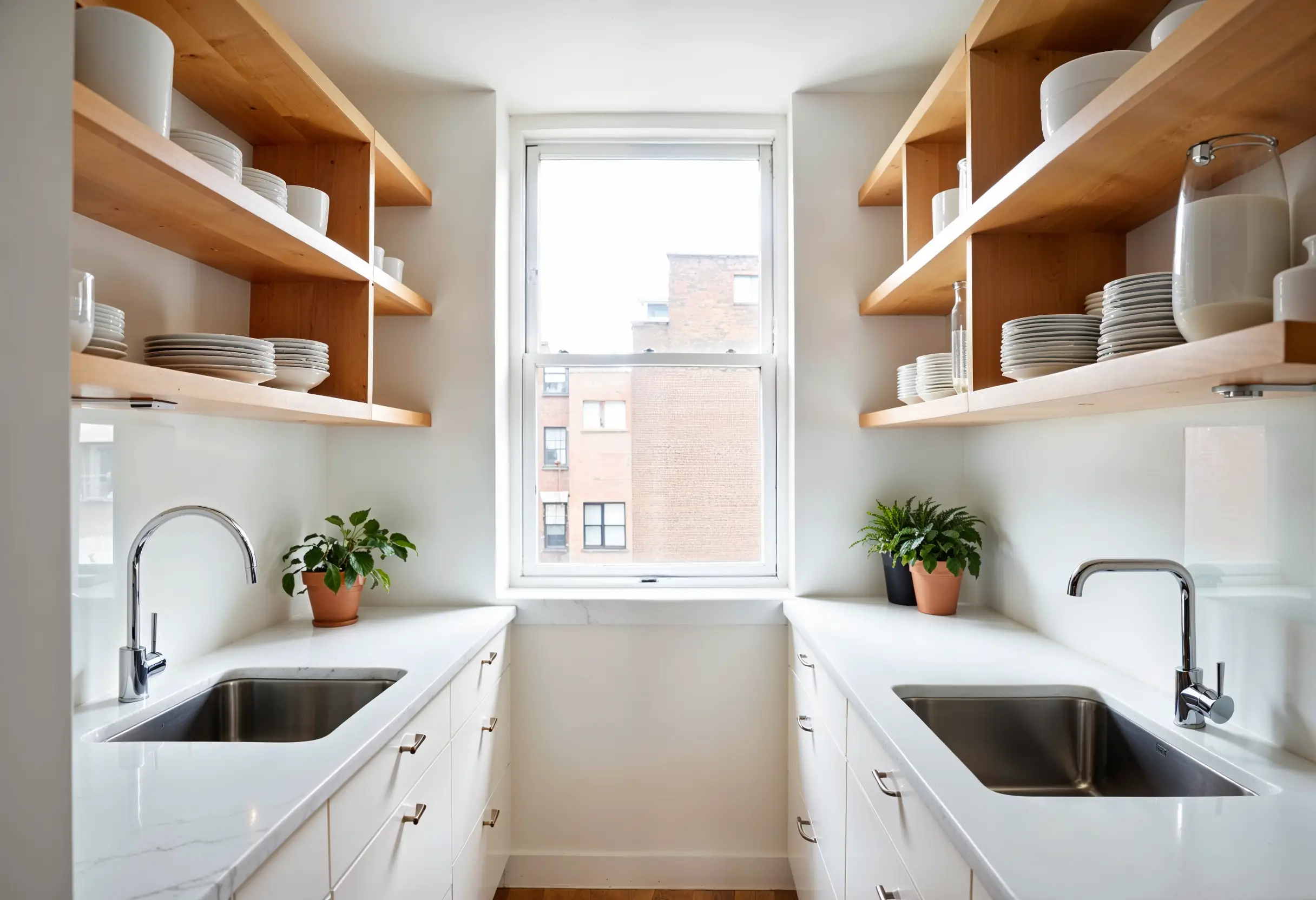
Open kitchen shelving has become one of the most popular ways to add personality, warmth, and practicality to a kitchen. Unlike traditional closed cabinets, open shelves put your dishes, glassware, cookbooks, plants, and decorative objects on display. They can make a kitchen feel larger, brighter, and more welcoming while also giving you easy access to everyday items.
However, there is one major challenge: open shelves can quickly look cluttered.
A shelf filled with mismatched plates, too many mugs, random containers, appliances, food packages, and decorative objects can make even a beautiful kitchen feel chaotic. The goal is not simply to put attractive things on shelves. Good open-shelf styling requires balance, repetition, negative space, organization, and a clear visual direction.
The good news is that you do not need an expensive kitchen renovation to create beautifully styled open shelving. With thoughtful editing and a few simple decorating principles, you can transform ordinary shelves into an intentional feature of your kitchen.
This guide explains how to style open kitchen shelving without making it look cluttered. Whether you have a tiny apartment kitchen, a modern kitchen, a farmhouse-style space, a minimalist kitchen, or a large family kitchen, these ideas can help you create shelves that are both practical and beautiful.
Why Open Kitchen Shelving Can Look Cluttered
Before learning how to style open shelving, it helps to understand why shelves become visually overwhelming.
Closed cabinets hide almost everything. Open shelves do the opposite: they expose every item. Because of this, the objects themselves become part of the kitchen’s visual design.
Several factors can make open shelves look messy:
- Too many objects
- Too many colors
- Different styles competing with each other
- No empty space
- Poor organization
- Excessive decoration
- Packaging and labels facing outward
- Items stacked too high
- Objects that are rarely used
- No repetition or visual connection
The solution is not necessarily to remove everything. Instead, think of your shelves as a composition.
Every object should have a purpose. Some items provide function, some add texture, and some create visual interest. The best shelves combine these elements without allowing any single category to dominate.
Start by Clearing the Shelves
The easiest way to create a cleaner look is to begin with a completely empty shelf.
Remove everything, even the objects you think you definitely want to keep there.
Place the items on a nearby table or countertop and look at them as a group. This gives you a better understanding of how much you actually own and how many different colors, shapes, and materials are competing for attention.
Sort everything into several categories:
Everyday Essentials
These are things you use regularly, such as:
- Dinner plates
- Bowls
- Coffee mugs
- Drinking glasses
- Serving dishes
- Small plates
- Cooking containers
These items should be easy to reach.
Decorative Items
These might include:
- Vases
- Artwork
- Small sculptures
- Decorative bowls
- Candles
- Plants
- Ceramics
Decorative objects should support the overall style rather than dominate the shelves.
Occasional Items
These are things you use only occasionally, such as special serving plates or holiday dishes.
They may be better stored elsewhere if they do not contribute to the everyday appearance of your shelves.
Items That Belong Somewhere Else
You may discover objects that have slowly migrated onto the shelves simply because there was space.
Remove them.
Open shelving works best when it has a clear purpose.
Choose a Color Palette
One of the most effective ways to prevent open shelves from looking cluttered is to limit the color palette.
You do not necessarily need everything to match. Instead, choose two or three dominant colors and let most of your objects work within that range.
For example, a neutral kitchen might use:
- White
- Cream
- Natural wood
- Soft green
A darker modern kitchen might use:
- Black
- White
- Warm wood
- Brass
A farmhouse kitchen might use:
- Cream
- Beige
- Brown
- Muted blue
A colorful kitchen could use one dominant color with a few supporting shades.
The important thing is consistency.
When every object has a completely different color, the eye jumps from item to item. When colors repeat, the shelves feel more cohesive.
Use the 70/30 Principle
A useful styling concept is to think of your shelves as approximately:
70% functional items and 30% decorative items.
This is not a strict mathematical rule. It simply reminds you that kitchen shelving should still function as kitchen storage.
For example, you might display:
- Plates
- Bowls
- Mugs
- Glassware
- Serving pieces
And then add:
- A small plant
- A ceramic vase
- A framed print
- A decorative bowl
The result feels practical rather than staged.
If your shelves contain 80% decorations and only a few usable kitchen items, they may look attractive but become inconvenient.
Create Negative Space
One of the biggest secrets to beautiful open shelving is empty space.
Empty space is not wasted space.
It gives your eyes somewhere to rest and makes the objects around it more noticeable.
If every inch of the shelf is occupied, nothing stands out. The entire shelf becomes one large visual block.
Instead, leave small gaps between groups.
For example, instead of placing ten mugs across an entire shelf, place five mugs together and leave some breathing room beside them.
You can also leave empty vertical space between the top of an object and the shelf above it.
This makes the display feel lighter.
Group Items Instead of Spreading Them Everywhere
Grouping similar objects creates order.
Instead of distributing your mugs randomly across multiple shelves, create a mug group.
Instead of separating plates individually, stack them.
Instead of scattering bowls around the shelves, create one or two organized stacks.
Grouping makes the eye understand the arrangement more quickly.
Common groupings include:
- Plates together
- Bowls together
- Mugs together
- Glasses together
- Cookbooks together
- Decorative ceramics together
- Plants together
The key is to create visual zones.
Stack Plates for a Clean Look
Plates are one of the easiest kitchen items to style.
Stack them horizontally.
A neat stack of white or neutral plates immediately creates a sense of order.
You can place:
- Dinner plates
- Smaller plates
- Side plates
in separate stacks or combine them carefully.
Avoid making stacks so tall that they become difficult to use.
You can also introduce subtle variation by using slightly different plate sizes.
For example, a stack might contain large dinner plates with smaller side plates on top.
This creates layers while maintaining organization.
Stack Bowls Carefully
Bowls can look beautiful on open shelves, but they can also create visual bulk.
Keep bowl stacks relatively low.
If you have colorful bowls, consider keeping them together rather than distributing them across every shelf.
If the bowls have different colors, select the shades that work best with the kitchen’s overall palette.
For a minimalist appearance, neutral ceramic bowls are especially effective.
Arrange Mugs With Intention
Mugs are often responsible for making open kitchen shelves look chaotic.
Why?
Because mugs come in many shapes, colors, handles, patterns, and sizes.
If you have a large collection, choose a smaller selection to display.
You could organize them by:
- Color
- Size
- Shape
- Material
- Use
For example, five matching ceramic mugs can look far more polished than ten completely unrelated mugs.
You do not need to throw away the rest. Store the extras in a cabinet.
Use Matching Containers
If you store dry foods on open shelves, matching containers can make an enormous difference.
Instead of displaying:
- Cereal boxes
- Flour bags
- Sugar packets
- Pasta packaging
- Snack bags
transfer frequently used ingredients into attractive containers.
Glass jars, ceramic containers, or simple neutral storage can create a consistent visual language.
Label them if necessary.
This technique is particularly useful for:
- Pasta
- Rice
- Flour
- Sugar
- Oats
- Coffee
- Tea
- Baking ingredients
The goal is to replace visual packaging noise with simple shapes and consistent materials.
Keep Food Packaging Hidden
Open shelves and colorful food packaging are not always a good combination.
Bright logos and labels can instantly make a carefully styled shelf look busy.
If you want to display food, consider using:
- Glass jars
- Wooden containers
- Ceramic canisters
- Woven baskets
- Neutral storage boxes
This allows you to keep food accessible without turning the shelves into a supermarket display.
Mix Heights
A shelf where every object is exactly the same height can look boring.
A shelf where every object is completely different can look chaotic.
The solution is variation with structure.
Mix:
- Tall objects
- Medium objects
- Short objects
For example, you might place a tall vase beside a medium stack of bowls and a small decorative object.
This creates a natural visual rhythm.
Create Triangles
A useful styling trick is to arrange objects in visual triangles.
Imagine three related objects forming a triangle.
For example:
- A tall vase on the left
- A medium stack in the center
- A small bowl on the right
On another shelf, you could reverse the arrangement.
This creates movement and prevents the shelves from looking rigid.
You do not need to literally create perfect geometric triangles. The principle is simply to vary heights and positions.
Add Natural Materials
Natural materials can make kitchen shelves feel warmer and more sophisticated.
Consider adding:
- Wood
- Rattan
- Wicker
- Stone
- Terracotta
- Linen
- Ceramic
A wooden cutting board leaning against a wall can add warmth to an otherwise white kitchen.
A small rattan basket can provide texture.
A ceramic vase can introduce softness.
The important thing is moderation.
Too many different materials can become visually noisy.
Add a Small Amount of Greenery
Plants are an excellent way to soften open kitchen shelving.
You can use:
- Small herbs
- Trailing plants
- Potted greenery
- Dried branches
- Small floral arrangements
Herbs are especially useful because they are decorative and functional.
Consider:
- Basil
- Mint
- Rosemary
- Thyme
Place plants where they receive suitable light and where watering will not damage the shelving.
If maintaining live plants is difficult, high-quality artificial greenery can also work.
Do Not Put Plants Everywhere
One or two plants may be enough.
If every shelf has greenery, the display can start to feel repetitive.
Instead, use plants strategically.
For example:
Top shelf: small trailing plant
Middle shelf: ceramics and dishes
Bottom shelf: cookbooks and serving bowls
This creates variation.
Use Cookbooks as Decor
Cookbooks can be both useful and attractive.
Arrange a small collection vertically or stack two or three horizontally.
Avoid displaying every cookbook you own.
Select books that:
- You actually use
- Have attractive covers
- Fit the kitchen’s color palette
- Add height or visual interest
You can place a small ceramic bowl or decorative object on top of a horizontal stack.
This creates a layered arrangement.
Lean Cutting Boards Against the Wall
Wooden cutting boards are particularly useful for open shelving because they provide warmth and texture.
Instead of storing them flat, stand them vertically against the wall.
You can layer different sizes.
For example:
- Large wooden cutting board
- Medium board
- Small serving board
This creates an attractive backdrop without requiring additional decoration.
Use Baskets to Hide Small Items
Small objects are often the biggest source of clutter.
Instead of displaying dozens of small items individually, place related objects inside a basket.
Baskets can hold:
- Napkins
- Tea towels
- Small kitchen tools
- Snacks
- Extra utensils
- Coffee supplies
Choose baskets that complement your kitchen.
Natural woven baskets work well with farmhouse, rustic, Scandinavian, and organic styles.
Keep Everyday Items at Eye Level
Function should determine placement.
Place the items you use most frequently on shelves that are easiest to reach.
For example:
Eye-level shelf:
- Mugs
- Bowls
- Everyday plates
Lower shelf:
- Serving dishes
- Cookbooks
- Storage baskets
Upper shelf:
- Decorative pieces
- Less frequently used items
This approach combines practicality with visual organization.
Use the Top Shelf Sparingly
The highest shelf often becomes a dumping ground.
Because it is harder to reach, people tend to put things there that they do not know where else to store.
Avoid this.
The top shelf should usually contain fewer items.
Consider:
- One large vase
- A plant
- A few decorative ceramics
- A small collection of cookbooks
Leaving some empty space above the objects can make the entire kitchen feel more open.
Avoid Filling Every Shelf Equally
A common mistake is trying to distribute objects evenly.
For example, someone may put exactly five objects on every shelf.
This can make the arrangement feel artificial.
Instead, vary the density.
One shelf might be:
- Heavily functional
Another might be:
- Moderately styled
Another might be:
- Mostly decorative
This creates visual rhythm.
Create Visual Balance
Balance does not necessarily mean symmetry.
You can use asymmetrical balance.
Imagine a large ceramic vase on the left side of one shelf. To balance it, you might place several smaller objects on the right.
The total visual weight can be similar even though the objects are different.
This is often more interesting than putting identical objects on both sides.
Repeat Materials
Repetition creates cohesion.
If you have a wooden cutting board, consider repeating wood elsewhere.
If you have brass hardware, perhaps add a small brass decorative object.
If your dishes are white ceramic, introduce another ceramic piece in a related shade.
Repetition makes separate objects feel like part of the same collection.
Repeat Colors Across Shelves
The same principle applies to color.
If you use blue mugs on one shelf, you could repeat a small amount of blue on another shelf.
The color does not need to appear everywhere.
Even small repeated accents can connect the shelves visually.
Use White Space Around Decorative Objects
A beautiful vase loses impact when it is surrounded by ten other objects.
Give statement pieces room.
If you have one especially attractive ceramic vase, let it breathe.
Place it next to only one or two supporting objects.
This makes it feel intentional rather than lost in the crowd.
Follow the Rule of Three
Three objects often create a pleasing visual group.
For example:
- Vase
- Bowl
- Small plant
Or:
- Cookbook stack
- Mug
- Decorative container
The rule of three works because odd-numbered groupings tend to feel more natural and dynamic.
However, do not force every arrangement into exactly three objects.
The goal is visual balance, not mathematical perfection.
Keep Similar Items Together
Open shelves are easier to maintain when objects have logical homes.
Create zones.
For example:
Coffee Zone
- Coffee mugs
- Coffee beans
- Sugar container
- Small coffee-related accessory
Breakfast Zone
- Bowls
- Cereal containers
- Small plates
Baking Zone
- Flour jar
- Sugar jar
- Measuring cups
- Baking books
This approach makes your kitchen more functional while also creating visual order.
Style Around Your Kitchen’s Architecture
Your shelving should complement the kitchen rather than fight with it.
If your kitchen has:
- Marble countertops
- Brass fixtures
- White cabinets
you might choose warm ceramics and subtle wood.
If your kitchen has:
- Dark cabinets
- Black hardware
- Industrial lighting
consider black, gray, wood, and neutral ceramics.
If your kitchen has:
- Light oak
- White walls
- Natural textures
Scandinavian-inspired styling may work beautifully.
Modern Open Shelf Styling
Modern kitchens usually benefit from simplicity.
Choose:
- Minimal ceramics
- Neutral colors
- Clean lines
- Limited decoration
- Glass
- Wood
- Black accents
Avoid too many small decorative objects.
A modern shelf might contain a few stacks of dishes, a glass container, one plant, and a simple vase.
Farmhouse Open Shelf Styling
Farmhouse kitchens can handle more texture.
Consider:
- White ceramic
- Wooden boards
- Woven baskets
- Vintage-style containers
- Neutral pottery
- Greenery
However, farmhouse does not mean everything needs to look old or rustic.
Keep the arrangement edited.
Scandinavian Open Shelving
Scandinavian-inspired styling emphasizes simplicity and function.
Use:
- White
- Cream
- Pale wood
- Soft gray
- Natural materials
Keep decorative objects minimal.
The result should feel calm rather than heavily decorated.
Industrial Open Shelving
Industrial kitchens often combine:
- Metal
- Wood
- Black
- Glass
- Concrete-inspired textures
You can emphasize this style with black brackets, reclaimed wood shelves, glass jars, and simple ceramics.
Avoid introducing too many unrelated decorative styles.
Small Kitchen Open Shelving
Open shelving can be especially useful in a small kitchen because it visually opens the room.
However, small kitchens also become cluttered more quickly.
Use fewer objects.
Choose pieces that serve multiple purposes.
For example:
A beautiful wooden cutting board can be both decorative and functional.
A ceramic pitcher can hold flowers or utensils.
A basket can store kitchen accessories.
This allows you to maximize both storage and visual simplicity.
Open Shelving in a Rental Kitchen
If you cannot modify the kitchen extensively, styling existing shelves can still make a major difference.
Focus on:
- Matching containers
- Coordinated dishes
- Small plants
- Wooden accessories
- Decorative bowls
- Cookbooks
You can create a cohesive appearance without permanent renovations.
Use Vertical Space
When styling shelves, think vertically as well as horizontally.
Instead of placing everything flat, use:
- Stacked plates
- Upright cutting boards
- Vertical cookbooks
- Tall vases
- Hanging mugs if appropriate
Vertical variation prevents the shelves from becoming one long horizontal line.
Avoid Too Many Tiny Objects
Tiny decorations are difficult to style.
One small object can be attractive.
Ten tiny objects can look like a collection of unrelated clutter.
If you have many small items you love, rotate them.
You do not need to display everything at once.
Rotate Seasonal Decorations
Open shelves are perfect for subtle seasonal changes.
In spring, add:
- Fresh greenery
- Light ceramics
- Soft colors
In summer:
- Blue accents
- Natural textures
- Fresh herbs
In autumn:
- Warm wood
- Terracotta
- Muted orange or brown accents
In winter:
- Neutral ceramics
- Evergreen branches
- Warm textures
Keep seasonal decoration limited.
A few changes can make the kitchen feel fresh without creating storage problems.
Keep Countertops and Shelves Connected
Open shelves and countertops are visually connected.
If the countertop is already full, heavily decorated shelves can make the kitchen feel overwhelming.
Try balancing the two.
If your countertop contains several appliances and accessories, keep the shelves simpler.
If the countertop is minimalist, you can allow the shelves to have slightly more visual interest.
Consider Shelf Thickness and Hardware
Sometimes clutter is not caused by the objects themselves.
The shelves’ physical design also affects the appearance.
Thick wood shelves create a substantial, rustic look.
Thin shelves create a lighter, modern appearance.
Black metal brackets can create an industrial feel.
Hidden brackets provide a minimalist appearance.
Choose objects that complement the shelf construction.
Use Different Textures Carefully
Texture adds depth.
You can combine:
- Smooth ceramic
- Rough wood
- Woven baskets
- Clear glass
- Soft textiles
But avoid using too many textures at once.
Three or four complementary textures are usually enough to create interest.
Use One Statement Piece
Every shelf arrangement can benefit from one focal point.
It might be:
- A large ceramic vase
- An interesting piece of pottery
- A framed artwork
- A vintage serving bowl
- A beautiful wooden cutting board
The statement piece should attract attention without overwhelming the rest.
Do Not Turn Shelves Into a Display Cabinet
Open kitchen shelves should still look like kitchen shelves.
If every object is purely decorative, the space may lose its natural character.
Use real kitchen items.
Beautiful everyday dishes can often provide enough decoration on their own.
Keep the Most Attractive Items Visible
Not everything needs to be displayed.
Choose your best-looking practical items.
If you own ten different mugs but only three coordinate with your kitchen, display the three.
If you have several sets of plates, display the set that best complements your space.
Store the rest behind closed doors.
Think About the Background
The wall behind open shelves is part of the design.
A simple wall allows objects to stand out.
A busy backsplash may require simpler shelf styling.
For example, if you already have patterned tile, choose restrained objects.
If your backsplash is plain white, you can introduce more texture through ceramics, wood, and plants.
Make Cleaning Easier
Open shelving looks beautiful when clean, but it can collect dust.
This is another reason not to overcrowd it.
Leave enough space around objects to wipe the shelves easily.
Avoid displaying items that you never use if they require frequent cleaning.
Frequently used dishes often stay cleaner because they are constantly being moved and washed.
Be Practical About Grease
Shelves near a stove can collect grease and cooking residue.
If your open shelves are close to the cooking area, avoid displaying delicate decorative objects or porous materials that are difficult to clean.
Use practical items in these locations.
You may want to keep purely decorative pieces farther away from the stove.
Create a Coffee Station
One popular way to style open shelves is to create a dedicated coffee area.
A simple setup might include:
- Coffee mugs
- Coffee jar
- Small tray
- Coffee books
- One plant
- Decorative ceramic
Keep the group compact.
This creates a clear purpose and prevents random items from accumulating.
Create a Tea Shelf
Similarly, tea lovers can create a dedicated tea area.
Display:
- Tea cups
- Teapot
- Tea jars
- Small tray
- Honey container
Use matching containers to keep the arrangement visually calm.
Display Beautiful Glassware
Glassware can look elegant on open shelves.
Clear glasses create a light visual effect.
Colored glass can add personality.
Arrange glasses in groups rather than scattering them across different shelves.
For a minimalist look, use similar shapes.
Display Serving Boards
Large serving boards are useful decorative elements because they add height.
Lean them vertically against the wall.
You can combine:
- Round boards
- Rectangular boards
- Small paddles
Keep the collection limited.
Use Trays to Create Mini Zones
A tray can visually organize several small objects.
For example, a tray might contain:
- Coffee jar
- Sugar container
- Mug
- Small spoon holder
Instead of appearing as four unrelated objects, they become one visual unit.
Do Not Overmatch Everything
While coordination is important, perfection can look artificial.
Your shelves do not need to contain identical plates, mugs, jars, and containers.
A little variation creates personality.
The goal is coordinated, not identical.
Use Vintage Pieces Carefully
Vintage kitchen items can add character.
Consider:
- Old ceramic pitchers
- Vintage bowls
- Wooden utensils
- Antique-inspired jars
- Classic cookbooks
Choose one or two statement pieces instead of filling every shelf with vintage objects.
Add Personal Items
Your kitchen should feel like your kitchen.
You can include:
- A handmade ceramic piece
- A favorite cookbook
- A family serving bowl
- A small travel souvenir
- Artwork
Personal objects add warmth.
Just keep them intentional.
The One-In, One-Out Rule
If your shelves are already full, use a simple rule:
Every new display item means one old item leaves.
This prevents gradual accumulation.
Without a system, open shelves tend to become increasingly crowded over time.
Reevaluate Your Shelves Regularly
Every few months, take everything off the shelves and reassess.
Ask:
- Do I still use this?
- Does it match the kitchen?
- Is it practical?
- Does it add visual interest?
- Could it be stored elsewhere?
- Is there enough empty space?
This simple process keeps your shelves looking fresh.
Common Open Shelving Mistakes
Mistake 1: Displaying Everything
Just because something fits does not mean it belongs on the shelf.
Mistake 2: Too Many Colors
A rainbow of unrelated objects can create visual chaos.
Mistake 3: No Empty Space
Shelves need breathing room.
Mistake 4: Too Much Decoration
Kitchen shelves should remain functional.
Mistake 5: Ignoring Scale
Tiny objects can disappear while oversized pieces can overwhelm.
Mistake 6: Random Placement
Objects should have some visual relationship.
Mistake 7: Too Many Collections
Displaying multiple collections simultaneously can make the kitchen feel like a store.
Mistake 8: Ignoring Practicality
If you need a ladder every time you want a mug, the shelf arrangement is not working.
A Simple Formula for Styling Any Shelf
If you are unsure where to begin, use this basic formula:
1 functional group + 1 vertical element + 1 decorative accent + empty space
For example:
- Stack of bowls
- Wooden cutting board
- Small plant
- Empty space
Another example:
- Mugs
- Tall ceramic vase
- Small bowl
- Empty space
Repeat the concept across your shelves while varying the objects.
A Five-Step Styling Method
Here is a simple process you can follow.
Step 1: Remove Everything
Start with completely empty shelves.
Step 2: Choose Your Color Palette
Select two or three dominant colors.
Step 3: Return the Essentials
Place your everyday plates, bowls, mugs, and glasses first.
Step 4: Add Texture and Height
Introduce wood, ceramics, baskets, plants, and vertical objects.
Step 5: Remove 10–20%
When you think you are finished, remove a few objects.
This final editing step often makes the biggest difference.
How to Style Three Open Shelves
If you have three shelves, you can give each a slightly different purpose.
Top Shelf
Keep it light.
Use:
- One plant
- One vase
- A few decorative ceramics
Middle Shelf
Make it functional.
Use:
- Mugs
- Bowls
- Everyday dishes
Bottom Shelf
Add weight and texture.
Use:
- Cookbooks
- Cutting boards
- Baskets
- Serving bowls
This creates a balanced arrangement from top to bottom.
How to Style Two Open Shelves
With two shelves, focus on contrast.
One shelf can contain mostly everyday kitchenware.
The other can include a combination of dishes, cookbooks, wood, and greenery.
Avoid making both shelves identical.
How to Style a Long Single Shelf
Long shelves can be challenging because objects may become scattered.
Create three or four visual zones.
For example:
Zone 1: plates and bowls
Zone 2: plant and vase
Zone 3: mugs and coffee supplies
Zone 4: cookbooks and cutting boards
Leave small gaps between zones.
This creates structure across the length of the shelf.
How to Style Corner Shelves
Corner shelving can easily become visually heavy.
Use the corner for one taller object, such as a vase or plant.
Keep the surrounding objects lower.
This creates a natural transition around the corner.
How to Make Open Shelves Look Expensive
You do not need expensive products.
Instead, focus on:
- Fewer objects
- Consistent colors
- Natural materials
- Quality-looking ceramics
- Clean lines
- Empty space
- Good lighting
A simple shelf with five carefully chosen objects can look more sophisticated than a shelf packed with twenty decorative pieces.
Lighting Matters
Lighting can dramatically affect the appearance of open shelves.
Warm lighting can make:
- Wood look richer
- Ceramics look softer
- Glassware sparkle
- The kitchen feel more inviting
Under-shelf lighting can also highlight your display.
However, avoid harsh lighting that makes every object look overly bright.
Styling Open Shelves on a Budget
You do not need to buy an entirely new collection.
Start with what you already own.
Try:
- Rearranging dishes
- Removing unnecessary objects
- Grouping similar colors
- Adding a plant
- Using existing cookbooks
- Displaying wooden cutting boards
- Reusing jars
- Adding one thrifted ceramic piece
Sometimes the best styling improvement costs nothing.
Thrift Store Finds
Thrift shops can be excellent sources of unique kitchen accessories.
Look for:
- Ceramic bowls
- Wooden boards
- Glass jars
- Vintage pitchers
- Simple baskets
- Small vases
Choose pieces that complement what you already own.
Do not buy something simply because it is interesting.
Ask whether it has a place in your kitchen.
How to Avoid the “Instagram Shelf” Look
Perfectly styled shelves can sometimes feel unrealistic.
Your kitchen is meant to be used.
Allow some signs of everyday life.
A few favorite mugs, a well-used cutting board, or a stack of cookbooks can make the space feel authentic.
The goal is not perfection.
The goal is intentionality.
Open Shelving With Kids
If you have children, practical considerations become even more important.
Place breakable objects higher.
Keep everyday child-friendly dishes in accessible locations.
Avoid overcrowding shelves with fragile decorations.
The best shelf arrangement is one that works for the people who actually use the kitchen.
Open Shelving for Entertaining
If you frequently host guests, display attractive serving pieces.
You can feature:
- Serving platters
- Wine glasses
- Cocktail glasses
- Serving bowls
- Elegant plates
But keep the arrangement organized.
A small entertaining collection can make the kitchen feel prepared without looking cluttered.
The Importance of Scale
Scale refers to the size of objects relative to the shelf and the kitchen.
A huge vase on a narrow shelf may feel overwhelming.
Tiny objects on a massive shelf may disappear.
Try to include at least one medium or large object in each major visual group.
Then support it with smaller pieces.
Keep Heavy Items Low
Visually heavy objects usually work better on lower shelves.
Examples include:
- Large baskets
- Heavy ceramic bowls
- Thick cutting boards
- Large serving dishes
Lighter objects can go higher.
This creates a stable appearance.
Think in Layers
Instead of placing everything in one straight line, create layers.
For example:
Place a cutting board at the back.
Put a bowl slightly in front.
Add a small plant beside it.
This creates depth.
However, make sure items remain accessible.
Use Symmetry When Necessary
Symmetry can work beautifully in kitchens.
For example, two matching stacks of plates on either side of a central vase can create a classic appearance.
Symmetry is especially useful when the surrounding architecture is symmetrical.
But do not feel obligated to use it everywhere.
Use Asymmetry for a Relaxed Look
If you prefer a more casual style, use asymmetry.
Place a tall object on one side and balance it with several shorter objects on the other.
This feels more relaxed and organic.
Style With Function First
Before placing anything on the shelf, ask:
Will I actually use this?
If yes, it deserves consideration.
Then ask:
Does it look good with the rest of the arrangement?
The best open shelving combines these two questions.
A Minimalist Shelf Formula
For a minimalist kitchen, try:
- One stack of plates
- One stack of bowls
- Three to five mugs
- One plant
- One wooden cutting board
- One decorative ceramic
Then stop.
Do not add objects simply because the shelf looks slightly empty.
Remember that empty space is part of the design.
A Cozy Shelf Formula
For a warmer kitchen, try:
- Ceramic plates
- Wooden cutting boards
- Woven basket
- Small plant
- Cookbooks
- Ceramic vase
Use warm neutrals and natural textures.
A Colorful Shelf Formula
If you love color, choose one dominant accent.
For example:
- White dishes
- Blue mugs
- Natural wood
- Small blue decorative object
The repeated accent color creates cohesion without making the shelves overwhelming.
How to Know When You Are Finished
One of the hardest parts of styling is knowing when to stop.
A useful test is to step away.
Look at the shelves from across the kitchen.
Then ask:
- What do I notice first?
- Is there one clear focal point?
- Do my eyes move naturally?
- Is anything competing for attention?
- Does the shelf feel balanced?
- Can I easily reach the things I use?
If your eyes immediately jump between many unrelated objects, remove something.
If the shelf feels empty but peaceful, it may already be finished.
The Final Editing Trick
Once you think your shelves look perfect, remove one or two objects.
This may sound strange, but it is one of the easiest ways to improve open shelving.
Many shelves become cluttered because people keep adding things without editing.
Removing an unnecessary object can make the remaining pieces look more important.
Frequently Asked Questions
Is open kitchen shelving hard to keep organized?
It can be if you display too many items. The key is to keep similar objects together, limit decoration, and regularly remove items you no longer use.
How many items should I put on an open shelf?
There is no universal number. The size of the shelf and the objects matter more than the exact quantity. Leave enough empty space for the arrangement to breathe.
Should all my dishes match?
No. They do not need to match perfectly. Similar colors, materials, or shapes can create enough cohesion.
What colors work best for open kitchen shelves?
Neutral colors such as white, cream, beige, black, gray, and natural wood are easy to coordinate. You can add one or two accent colors for personality.
Should I decorate open shelves with plants?
Yes, plants can add softness and color. However, one or two plants are often enough.
Can I display food on open shelves?
Yes. Use matching jars, containers, or baskets to reduce packaging clutter.
How can I make open shelves look minimalist?
Use fewer objects, limit the color palette, create negative space, and prioritize functional items with attractive forms.
How often should I restyle open kitchen shelves?
There is no fixed schedule. A seasonal refresh every few months can help, especially if you notice that objects are accumulating.
Should I put heavy items on upper shelves?
Usually, heavy objects are more practical and visually stable on lower shelves. Keep higher shelves lighter and easier to access.
How can I style shelves in a small kitchen?
Use fewer objects, matching containers, vertical storage, and multifunctional decorative pieces. Avoid filling every available inch.
What should go on the top shelf?
The top shelf is ideal for lightweight decorative objects, plants, attractive ceramics, and items you use less frequently.
How do I stop open shelving from looking messy?
Limit colors, group similar objects, create empty space, hide packaging, vary heights, and edit unnecessary items.
Final Thoughts
Open kitchen shelving can completely change the atmosphere of a kitchen. It can make a small space feel more open, bring warmth to a modern kitchen, showcase beautiful dishes, and provide convenient everyday storage.
But successful open shelving is not about displaying as many beautiful things as possible.
It is about editing.
Choose objects carefully. Group similar items. Repeat colors and materials. Introduce different heights and textures. Leave negative space. Keep everyday essentials accessible. Hide unattractive packaging. Add a small amount of greenery and personality.
Most importantly, remember that your shelves are part of a working kitchen.
They should look beautiful, but they should also make your daily life easier.
The most successful open shelving usually has a relaxed appearance: a few stacks of dishes, some favorite mugs, a wooden cutting board, a plant, a cookbook or two, and plenty of breathing room.
When every object has a purpose and every group has enough space around it, your shelves will feel intentional rather than cluttered.
You do not need a designer kitchen or a large decorating budget to achieve this look. Start by removing everything, keep only what you love or use, establish a simple color palette, and build your arrangement slowly.
When in doubt, take something away rather than adding something new.
That simple principle can transform open kitchen shelving from a collection of random objects into one of the most attractive and functional features in your home.